
What Is a Security Token?
Security tokens bring regulated securities onto the blockchain. They were the first bridge between Wall Street and crypto — and the people writing this guide built that bridge.
Subscribe Free. The weekly briefing is free, always.
Tokens That Come with Legal Rights
A security token is a digital token on a blockchain that represents ownership of a regulated financial security. That security could be equity in a company, a share of a real estate fund, a bond, or a revenue-sharing agreement. The key distinction: security tokens give holders legal rights — ownership, dividends, voting power, or a claim on profits.
This is what separates security tokens from most cryptocurrencies. Bitcoin is a digital commodity. Ethereum's ETH is a utility token that powers the network. A meme coin is a speculative bet on internet culture. A security token is a regulated investment that happens to live on a blockchain instead of in a brokerage account.
Because they represent securities, security tokens must comply with securities laws — the same regulations that govern stocks, bonds, and fund shares. In the United States, that means SEC registration or an applicable exemption. This regulatory framework is what gives security tokens their legitimacy and institutional appeal.
Security Tokens vs Utility Tokens
The crypto industry broadly divides tokens into two categories, and understanding the difference is critical:
| Feature | Security Token | Utility Token |
|---|---|---|
| What it represents | Ownership of an asset or investment | Access to a product or service |
| Legal rights | Dividends, voting, profit sharing | Usage rights only |
| Regulation | Subject to securities laws | Generally unregulated |
| Who can buy | KYC/AML verified investors | Anyone |
| Value driver | Underlying asset performance | Network usage and speculation |
| Transfer restrictions | Smart contract enforced compliance | Typically none |
The distinction isn't always clean. The SEC has argued that many tokens sold as “utility tokens” during the 2017 ICO boom were actually unregistered securities. The Howey Test — the legal framework used to determine whether something is a security — asks whether there is an investment of money in a common enterprise with an expectation of profits derived from the efforts of others. Many crypto tokens meet this definition, whether their creators intended it or not.
How Security Token Offerings Work
A security token offering (STO) is the process of issuing security tokens to investors. Unlike an ICO (initial coin offering), which was largely unregulated, an STO follows securities laws from the start.
Legal structuring. The issuer works with securities lawyers to structure the offering under an applicable regulation — Regulation D (accredited investors only), Regulation A+ (open to all investors up to $75 million), Regulation S (non-U.S. investors), or a full SEC registration.
Smart contract creation. The security token is created on a blockchain with built-in compliance rules. The smart contract can enforce transfer restrictions: only verified wallets can hold the token, holding periods are programmatically enforced, and investor caps are maintained automatically. This is where tokenomics meets securities regulation.
Distribution. Tokens are sold to verified investors through regulated platforms. Unlike utility tokens that can be bought on any exchange, security tokens require KYC/AML verification before purchase.
Ongoing compliance. The token issuer must maintain regulatory compliance — filing reports, distributing dividends, and maintaining investor records. Smart contracts automate much of this, but the legal obligations remain.
The First SEC-Registered Security Token IPO
In the early days of security token offerings, most operated under regulatory exemptions — Reg D or Reg S — which limited who could invest. But the real breakthrough came when the first SEC-registered security token IPO launched under Regulation A+, opening the offering to all investors regardless of accreditation status.
That offering raised $85 million from over 7,200 investors across 74 countries. It proved something that many in traditional finance doubted: that blockchain-based securities could comply fully with existing regulations while offering genuinely global distribution. It also demonstrated how platforms like Republic and StartEngine can turn investors into customers — creating a direct commercial relationship between issuers and their token holders.
The significance wasn't just the money raised. It was the proof of concept. If a regulated security could be issued, distributed, and managed on a blockchain — with automated compliance, global access, and fractional ownership — then any security could. Stocks, bonds, real estate, private equity — everything was on the table.
Why Security Tokens Matter
Security tokens solve real problems in traditional capital markets:
Liquidity for illiquid assets. Private equity, real estate, and venture capital are traditionally illiquid — once you invest, your money is locked up for years. Security tokens enable secondary trading on regulated exchanges, giving investors the option to exit before the investment matures.
Lower costs. Issuing securities traditionally involves investment banks, transfer agents, registrars, and custodians — each taking a cut. Security tokens automate many of these functions through smart contracts, reducing issuance costs by up to 90%.
Fractional ownership. A $50 million real estate fund can be divided into millions of tokens, each representing a tiny fraction of ownership. This opens institutional-quality investments to retail investors who couldn't meet traditional minimums.
Programmable compliance. Transfer restrictions, dividend distributions, voting rights, and reporting can all be encoded in the smart contract. Compliance becomes automatic rather than manual — reducing human error and cost. The Insumer Model takes this further by using programmatic wallet auth to identify token holders at the point of sale, turning compliance infrastructure into a customer engagement layer.
Global distribution. A security token offering can reach investors in 74 countries simultaneously. Traditional securities issuance is typically limited to one or two jurisdictions due to regulatory complexity.
Security Tokens and Real-World Asset Tokenization
When BlackRock launched its tokenized Treasury fund (BUIDL) on Ethereum, it was building on the foundation that security token pioneers laid years earlier. The concepts are the same: put regulated financial instruments on a blockchain, use smart contracts to enforce compliance, and enable fractional ownership and 24/7 settlement.
What's changed is scale and credibility. When a startup issues a security token, it's innovation. When BlackRock does it, it's validation. The RWA tokenization movement currently exceeding $15 billion in on-chain assets is the direct descendant of the STO movement — with institutional backing and mature infrastructure.
The path from the first SEC-registered STO to BlackRock's BUIDL is a straight line. The early security token builders proved the concept, built the legal frameworks, and created the smart contract standards. The institutions walked through the door that those pioneers opened.
The Cap Table Revolution
One of the most practical applications of security tokens is cap table management. Every company has a cap table — a record of who owns what percentage of the company. For early-stage startups, managing cap tables is a nightmare of spreadsheets, legal filings, and manual reconciliation.
Security tokens solve this by putting equity ownership on a blockchain — and as tokenized stocks put the shareholder and the customer in the same wallet, that record becomes far more powerful. Every share is a token. Every transfer is recorded immutably. Dividend distributions are automatic. Vesting schedules are enforced by smart contracts. And the entire cap table is always up to date, always auditable, and always accurate.
This is particularly relevant for the 33 million+ early-stage companies that need proper cap table infrastructure but can't afford the enterprise solutions used by later-stage companies. Blockchain-based equity tokenization offers institutional-grade cap table management at a fraction of the cost. And when those token holders are also customers, the cap table becomes a real-world utility engine — shareholders can receive automatic discounts, access, and loyalty rewards simply by holding their equity tokens.
Risks and Challenges
Regulatory complexity. Securities laws vary by jurisdiction. A token that's compliant in the U.S. may not be compliant in the EU or Asia. Navigating multi-jurisdiction compliance is expensive and complex.
Limited secondary markets. While several regulated security token exchanges exist (tZERO, INX, Securitize Markets), liquidity is still thin compared to traditional stock exchanges. This is improving as institutional adoption grows — Securitize itself is heading to the NYSE through a $400 million SPAC merger, a tokenization platform becoming a public company in its own right.
Custody and infrastructure. Holding security tokens requires wallets and custody solutions that meet both blockchain and securities requirements. This infrastructure is maturing but not yet as seamless as traditional brokerage accounts.
Investor education. Many investors — both retail and institutional — still don't understand the difference between a security token and a meme coin. Education is the bottleneck for adoption, which is one reason we built this guide.
Where Security Tokens Are Going
The trajectory is clear: every security will eventually exist on a blockchain. Not because blockchain is trendy, but because it's more efficient. Faster settlement, lower costs, global access, programmable compliance, and fractional ownership aren't nice-to-haves — they're competitive advantages that traditional infrastructure can't match.
The early STOs proved it was possible. The current RWA boom is proving it's inevitable. The question isn't whether securities will move to blockchain — it's how fast and who will build the infrastructure that gets them there.
And "fast" is now measured in weeks, not years. In July 2026, Robinhood's Stock Tokens added 200,000 holders in a single week and the DTCC began production trades of tokenized Russell 1000 stocks. By August, tokenized stock holders neared 760,000, up 92% in one month. The open question has shifted: not whether shares move on-chain, but what a holder can actually do with them once they're there.
From the Author
Old Men, New Money co-host Douglas Borthwick has written on this in depth.
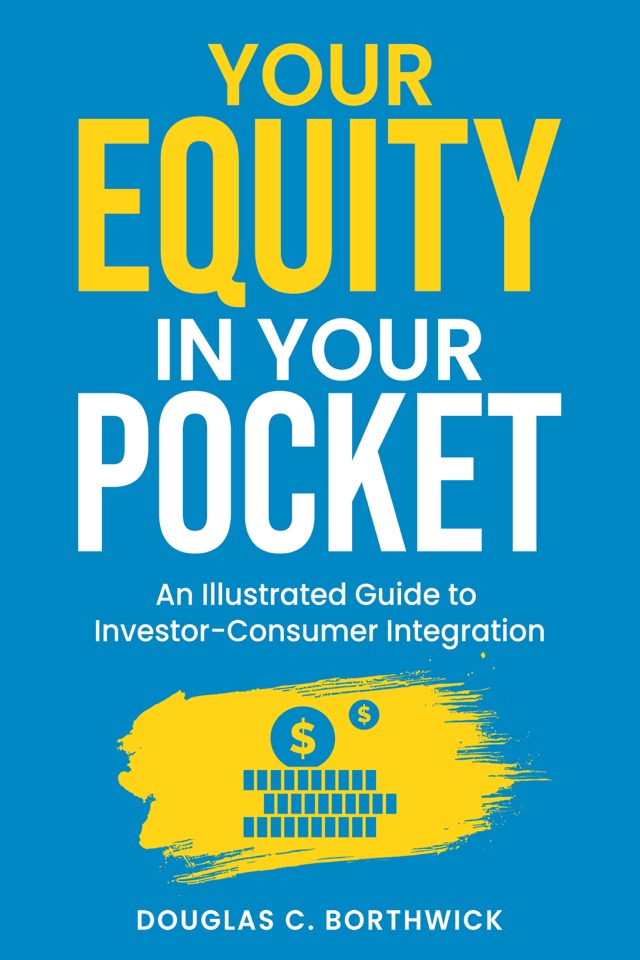
Your Equity in Your Pocket
An Illustrated Guide to Investor-Consumer Integration
What it looks like when customers become owners, one tokenized share at a time. The illustrated, sector-by-sector guide to equity in the hands of the people who buy from you.
Read the book →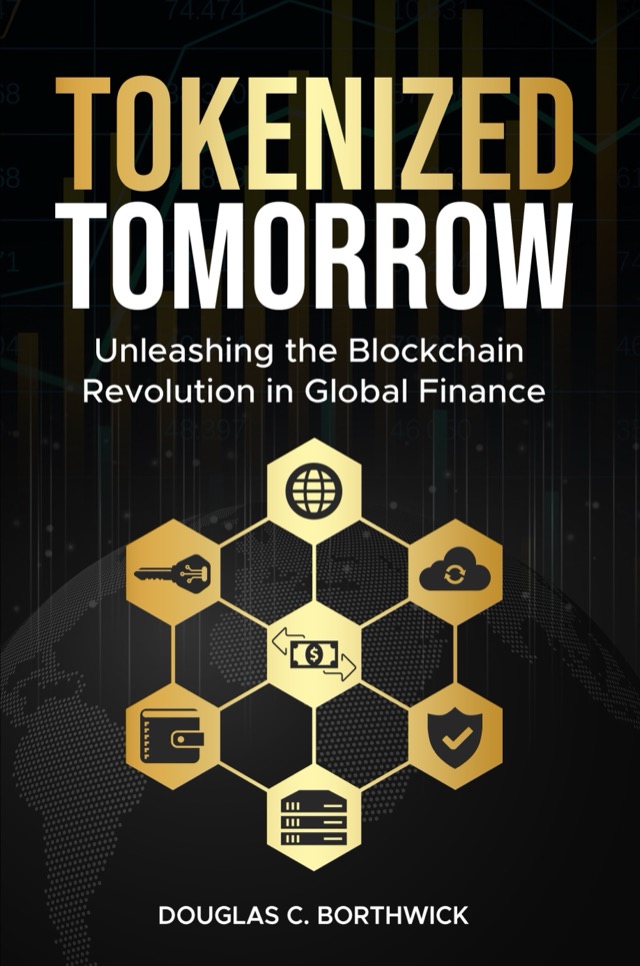
Tokenized Tomorrow
Unleashing the Blockchain Revolution in Global Finance
The operator's guide to tokenizing real assets: the mechanics, the plumbing, and the compliance wrappers that make it real. From the leader behind the first SEC-registered security token IPO.
Read the book →Related Conversations
Industry leaders discuss the evolution of digital securities.



Continue Learning
Want the Full Picture?
Join 38,000+ professionals getting weekly crypto and finance analysis from Wall Street veterans — delivered free to your inbox.
The weekly briefing is free, always.