
Blockchain Explained in Plain English
Crypto explained by people who've seen markets before. No hype, just understanding. Here's what blockchain actually is, how it works under the hood, and why Wall Street is paying attention.
Subscribe Free. The weekly briefing is free, always.
What Is a Blockchain?
A blockchain is a distributed ledger — a record of transactions shared across a network of computers. Instead of one bank or company maintaining a single database, thousands of independent computers (called nodes) each hold an identical copy of the same data. When a new transaction happens, every copy updates simultaneously.
Think of it like a shared Google Sheet that thousands of people can read, but nobody can secretly edit. Every entry is permanent, time-stamped, and visible to everyone. The difference is that a blockchain doesn't rely on Google — or any company — to maintain it. The network itself enforces the rules.
This was the breakthrough that made Bitcoin possible. Before blockchain, digital money had an unsolvable problem: how do you prevent someone from spending the same digital dollar twice without a central authority keeping score? Blockchain solved it by making every participant the bookkeeper.
How Blocks and Chains Work
The name "blockchain" is literal. Data is organized into blocks, and those blocks are linked together in a chain. Here's how:
Step 1: Transactions Are Grouped Into Blocks
When you send cryptocurrency to someone, that transaction doesn't get recorded immediately. It sits in a waiting area (called a mempool) along with other pending transactions. Periodically, a batch of these transactions is grouped into a block. On Bitcoin, a new block is created roughly every 10 minutes. On Ethereum, it's about every 12 seconds.
Step 2: Blocks Get a Cryptographic Fingerprint
Each block is run through a cryptographic hash function — a mathematical process that takes any input and produces a fixed-length string of characters called a hash. Change even one character in the input, and the output changes completely. This hash acts as a unique fingerprint for the block's contents.
Critically, every block also contains the hash of the previous block. This is what creates the chain. Block 500 contains the fingerprint of Block 499, which contains the fingerprint of Block 498, and so on — all the way back to Block 0 (the genesis block).
Step 3: Tampering Becomes Impossible
If someone tried to alter a transaction in Block 499, the hash of that block would change. But Block 500 contains the old hash of Block 499, so Block 500 would now be invalid too. The attacker would have to recalculate every block from 499 onward — and do it faster than the entire rest of the network is adding new blocks. On Bitcoin, that would require controlling more than half of all mining power on Earth. In practice, it's impossible.
Step 4: Consensus Validates the Chain
Before a block is added, the network must agree that its transactions are valid. This agreement process is called a consensus mechanism. Bitcoin uses Proof of Work — miners compete to solve a math puzzle, and the winner earns the right to add the block. Ethereum uses Proof of Stake — validators lock up (stake) their ETH as collateral and are chosen to propose blocks. Both methods ensure that no single party can control what gets added to the chain.
Why Blockchain Matters
After 75+ combined years on Wall Street, we've seen firsthand how much of the financial system depends on intermediaries — clearinghouses, custodians, correspondent banks, transfer agents. Each one adds cost, delay, and a point of failure. Blockchain eliminates the need for most of them. Here's why that's significant:
- Removing intermediaries: Blockchain allows two parties to transact directly, without a middleman to verify, settle, or record the transaction. This reduces cost and speeds up settlement from days to minutes — or seconds.
- Transparency: On a public blockchain, every transaction is visible to anyone. This is a radical departure from traditional finance, where settlement happens behind closed doors. Transparency builds trust without requiring it.
- Immutability: Once data is written to a blockchain, it cannot be altered or deleted. This creates an auditable, permanent record — something regulators, auditors, and compliance teams actually want.
- Programmability: Blockchains like Ethereum allow you to attach rules to money through smart contracts — self-executing programs that automatically enforce agreement terms. This is the foundation of decentralized finance (DeFi).
Public vs Private Blockchains
Not all blockchains work the same way. The two main categories are public and private, and they serve very different purposes.
Public Blockchains
Public blockchains are open to everyone. Anyone can read the ledger, submit transactions, run a node, or participate in validation. Bitcoin and Ethereum are the most well-known public blockchains. Solana and Aptos are newer examples optimized for speed and throughput.
Public blockchains prioritize decentralization and censorship resistance. No government or company can shut them down, freeze accounts, or change the rules unilaterally. The trade-off is that they're generally slower and less private than centralized alternatives.
Private (Permissioned) Blockchains
Private blockchains restrict who can participate. Only approved parties can read data, submit transactions, or validate blocks. Hyperledger (developed by the Linux Foundation) and R3 Corda are common examples used by enterprises and banks.
Private blockchains sacrifice decentralization for speed, privacy, and regulatory compliance. They're useful when organizations need shared record-keeping among known participants — like a consortium of banks settling interbank transfers.
Smart Contracts: Programmable Money
One of blockchain's most powerful innovations is the smart contract — a self-executing program stored on the blockchain that automatically runs when certain conditions are met. Think of it as an if/then statement enforced by code instead of a lawyer.
For example: "If Party A deposits $1,000 and Party B delivers the digital asset, release the funds to Party B and the asset to Party A — automatically." No escrow agent needed. No waiting for business hours. No disputes about whether conditions were met.
Smart contracts power everything from decentralized exchanges to lending protocols to tokenized real estate. They're the reason Ethereum became the platform of choice for developers — and why understanding them is essential for anyone in finance. Our education modules cover smart contracts in more depth.
Key Blockchains You Should Know
The blockchain landscape is large, but a handful of networks dominate. Here are the ones that matter most:
- Bitcoin: The original blockchain. Optimized for security and decentralization. The hardest money ever created — 21 million coin cap, no exceptions. Used primarily as a store of value and inflation hedge.
- Ethereum: The first blockchain to support smart contracts. Home to the largest ecosystem of decentralized applications (dApps), DeFi protocols, and tokenized assets. Transitioned from Proof of Work to Proof of Stake in 2022.
- Solana: A high-speed blockchain that processes thousands of transactions per second at very low cost. Popular for consumer applications, NFTs, and DeFi. Trades some decentralization for performance.
- Aptos: A newer Layer 1 blockchain built by former Meta (Facebook) engineers using the Move programming language. Designed for safety, scalability, and institutional use cases.
Blockchain in Traditional Finance
Here's what most crypto explainers miss: blockchain isn't just disrupting finance from the outside. Traditional finance is actively adopting it. We've watched this happen from the inside, and the pace is accelerating.
Tokenization
Tokenization means representing real-world assets — bonds, real estate, private equity, treasury bills — as tokens on a blockchain. BlackRock's BUIDL fund tokenized U.S. Treasuries on Ethereum. Franklin Templeton did the same on Stellar and Polygon. This isn't theoretical — it's happening now, with billions in tokenized assets already on-chain. For more, watch our deep dive on how tokenization will change finance.
Settlement
Traditional securities settlement takes T+1 (one business day). Blockchain settlement can happen in seconds. JPMorgan's Onyx platform already processes billions in repo transactions on a private blockchain. The potential savings in capital efficiency and reduced counterparty risk are enormous.
Stablecoins
Stablecoins are blockchain-based tokens pegged to the value of a traditional currency, typically the U.S. dollar. USDC and USDT together process more daily transaction volume than PayPal. They're the bridge between traditional finance and blockchain — and they're being used for cross-border payments, remittances, and as on-chain collateral.
Common Misconceptions
Blockchain is widely discussed but often misunderstood. Here are the claims we hear most often — and the reality:
- "Blockchain and Bitcoin are the same thing." Bitcoin is one application built on blockchain technology. Blockchain is the underlying infrastructure — like email is one application built on the internet. Many blockchains have nothing to do with Bitcoin.
- "Blockchain is anonymous." Public blockchains are pseudonymous, not anonymous. Every transaction is visible on the public ledger. Law enforcement agencies routinely trace blockchain transactions to identify individuals. It's actually more traceable than cash.
- "Blockchain is too slow for real-world use." Early blockchains had throughput limitations, but newer networks like Solana process thousands of transactions per second. Layer 2 solutions on Ethereum (like Arbitrum and Optimism) offer near-instant finality at minimal cost.
- "Blockchain is just a buzzword." Every major global bank, the Federal Reserve, the ECB, and the Bank of England are actively researching or deploying blockchain-based systems. BlackRock's CEO Larry Fink has called tokenization "the next generation for markets." This is infrastructure, not hype.
How Blockchain Connects to Wallets, Tokens, and DeFi
Blockchain is the foundation layer. Everything else in crypto is built on top of it:
- Crypto wallets are how you interact with the blockchain — they hold your private keys, sign transactions, and let you send and receive assets.
- Tokens are digital assets created and tracked on a blockchain. Some represent currencies, some represent ownership stakes, some grant governance rights in decentralized protocols.
- DeFi (Decentralized Finance) uses smart contracts on blockchains like Ethereum to recreate financial services — lending, borrowing, trading, insurance — without banks or brokers.
- Stablecoins are tokens designed to maintain a stable value, usually pegged to the U.S. dollar. They live on blockchains and are the primary on-ramp between traditional money and digital assets.
The Bottom Line
Blockchain is not just the technology behind Bitcoin — it's a fundamental shift in how data, value, and trust are managed. It replaces intermediaries with math, opacity with transparency, and centralized control with distributed consensus.
You don't need to understand cryptographic hash functions to benefit from blockchain. But you do need to understand what it makes possible: faster settlement, programmable money, tokenized assets, and financial systems that operate 24/7 without gatekeepers.
Between us, we've spent over 75 years on trading floors and in financial institutions. We've seen technologies come and go. Blockchain is not going anywhere — it's being absorbed into the infrastructure of global finance. The question isn't whether it matters. It's whether you understand it before it reshapes the systems you depend on.
From the Author
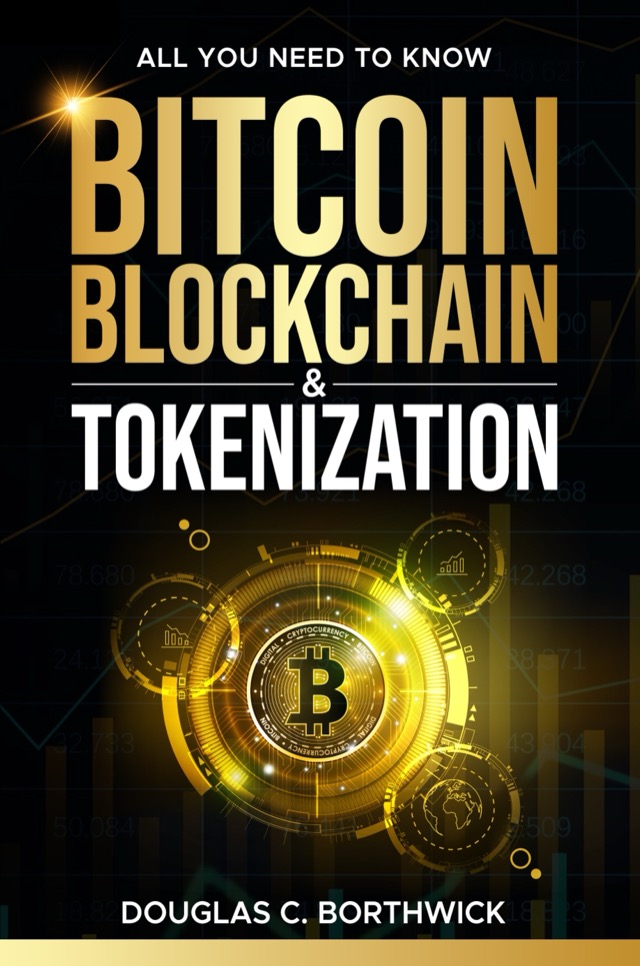
Old Men, New Money co-host Douglas Borthwick has written on this in depth.
Watch Our Blockchain Conversations
Deep dives on blockchain technology, tokenization, and the future of finance.



Continue Learning
Want the Full Picture?
Join 38,000+ professionals getting weekly crypto and finance analysis from Wall Street veterans — delivered free to your inbox.
The weekly briefing is free, always.