
Bitcoin Explained Simply
Crypto explained by people who've seen markets before. No hype, no jargon — just a clear explanation of what Bitcoin is, how it works, and why it matters.
Subscribe Free. The weekly briefing is free, always.
What Is Bitcoin?
Bitcoin is digital money. It lets you send value to anyone in the world without a bank, a government, or any middleman approving the transaction. It was created in 2009 by a pseudonymous developer called Satoshi Nakamoto, and it was the first cryptocurrency ever built.
Unlike the dollar, which the Federal Reserve can print in unlimited quantities, Bitcoin has a hard cap: there will only ever be 21 million bitcoins. This built-in scarcity is one of the key reasons people compare it to gold — but unlike gold, you can send it across the world in minutes.
Why Was Bitcoin Invented?
Bitcoin was born out of the 2008 financial crisis. Banks had taken enormous risks with depositors' money, governments bailed them out, and ordinary people paid the price through inflation, lost savings, and eroded trust.
Satoshi Nakamoto's white paper, published in October 2008, proposed something radical: a peer-to-peer electronic cash system that doesn't require trust in any institution. The idea was simple — if the rules are enforced by math and code instead of people, the system can't be corrupted.
The first block of the Bitcoin blockchain (the "genesis block") included a headline from The Times: "Chancellor on brink of second bailout for banks." It was a statement of purpose.
How Does Bitcoin Work?
Bitcoin works through three key innovations working together:
1. The Blockchain
Every Bitcoin transaction is recorded on a public ledger called the blockchain. Think of it as a giant spreadsheet that everyone can read but nobody can alter. Every 10 minutes, a new "block" of transactions is added to the chain, creating a permanent, tamper-proof record.
2. Mining (Proof of Work)
New blocks are added by miners — computers that compete to solve a complex math puzzle. The first miner to solve it gets to add the block and earns newly created bitcoin as a reward. This process is called Proof of Work, and it's what keeps Bitcoin secure without a central authority.
3. Cryptographic Keys
Every Bitcoin owner has a crypto wallet with two keys: a public key (like an email address — you share it to receive bitcoin) and a private key (like a password — you never share it). The private key proves ownership and authorizes transactions. If you lose it, you lose your bitcoin. There is no "forgot password" button.
Why Does Bitcoin Have Value?
This is the question people struggle with most. Bitcoin isn't backed by a government or a physical commodity. So why does it have value?
- Scarcity: Only 21 million will ever exist. Over 19.5 million have already been mined. As supply shrinks, demand drives price.
- Decentralization: No single entity controls Bitcoin. No government can print more of it. No CEO can change the rules.
- Network effects: Hundreds of millions of people and institutions now use, hold, or trade bitcoin. The more participants, the more useful the network becomes.
- Institutional adoption: BlackRock, Fidelity, and other major institutions now offer Bitcoin ETFs. Multiple U.S. states allow pension funds to hold it.
Bitcoin vs Traditional Money
| Feature | US Dollar | Bitcoin |
|---|---|---|
| Supply | Unlimited (Fed prints more) | Capped at 21 million |
| Control | Federal Reserve / banks | Decentralized network |
| Transfer speed | 1-5 business days (wire) | ~10 minutes (global) |
| Operating hours | Business hours | 24/7/365 |
| Transparency | Opaque | Fully public ledger |
| Inflation | ~2-8% annually | Decreasing by design (halvings) |
What Is the Bitcoin Halving?
Every four years, the reward that miners earn for adding new blocks is cut in half. This event is called the "halving." When Bitcoin launched, miners earned 50 BTC per block. After the 2024 halving, they earn 3.125 BTC. This gradually reduces the rate of new supply entering the market, reinforcing Bitcoin's scarcity.
Historically, each halving has been followed by a significant price increase — though past performance is never a guarantee of future results.
Common Misconceptions
There are many myths about crypto that prevent people from understanding it clearly:
- "Bitcoin is only used by criminals." Less than 1% of Bitcoin transactions involve illicit activity (Chainalysis 2024). The blockchain is public — it's actually terrible for crime compared to cash.
- "Bitcoin uses too much energy." Bitcoin mining increasingly uses renewable energy. The debate is whether the energy consumption is worth the value the network provides — just like any other industry.
- "Bitcoin is too volatile to be useful." Volatility has decreased over time as the market has matured. Institutions now use Bitcoin as a portfolio diversifier and inflation hedge.
How to Get Bitcoin
There are several ways to acquire bitcoin:
- Exchanges: Platforms like Coinbase, Kraken, or Gemini let you buy bitcoin with dollars. You'll need to verify your identity (KYC).
- Bitcoin ETFs: BlackRock's iShares Bitcoin Trust (IBIT) and similar products let you get bitcoin exposure through a traditional brokerage account.
- Peer-to-peer: Buy directly from another person, though this requires more caution.
- Mining: Run specialized hardware to earn bitcoin by validating transactions. This is capital-intensive and competitive.
However you acquire bitcoin, understanding how wallets work is essential for keeping it safe. For a deeper look at Bitcoin security and self-custody, watch our conversation with Jameson Lopp.
The Bottom Line
Bitcoin is the first truly decentralized money. It was designed to work without trusted intermediaries, to be resistant to inflation, and to be accessible to anyone with an internet connection. Whether you see it as digital gold, a payment network, or a speculative asset, understanding how it works is the first step.
We've been in markets for over 75 years combined. We've watched the internet transform finance once. Bitcoin and blockchain are doing it again. Our advice: learn before you invest.
From the Author
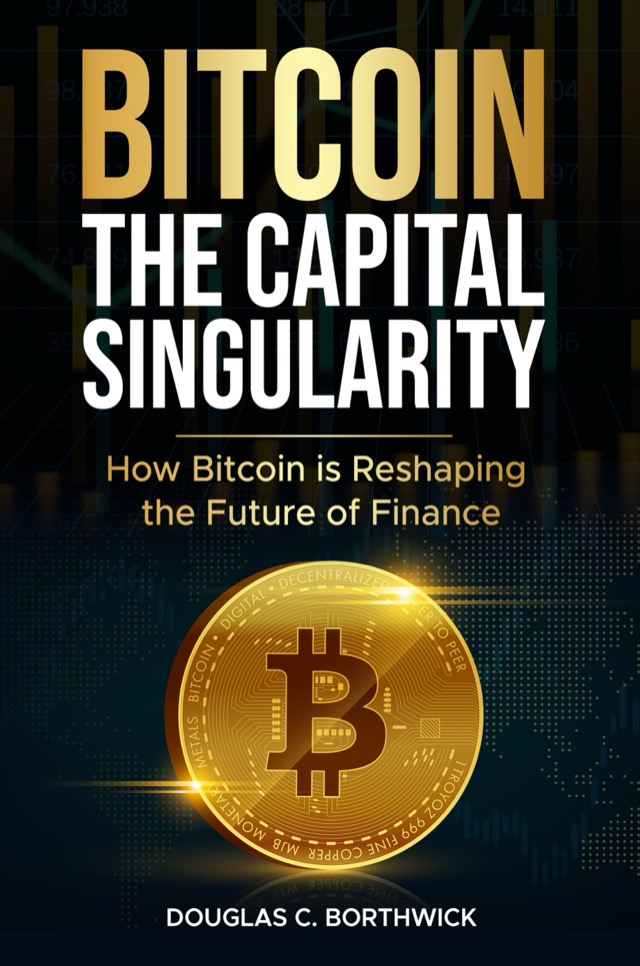
Old Men, New Money co-host Douglas Borthwick has written on this in depth.
Watch Our Bitcoin Conversations
Deep dives with industry leaders on Bitcoin's security, adoption, and future.


Want the Full Picture?
Join 38,000+ professionals getting weekly crypto and finance analysis from Wall Street veterans — delivered free to your inbox.
The weekly briefing is free, always.