
Why Bitcoin Has Value
The economics of digital scarcity, network effects, and sound money — explained by people who've traded both sides of the balance sheet.
Subscribe Free. The weekly briefing is free, always.
The Question Everyone Asks
"But it's not real money. It's not backed by anything. Why would anyone pay $100,000 for a digital token?"
We've heard this question hundreds of times — from hedge fund managers, from retired bankers, from people at dinner parties. It's the single most common objection to Bitcoin, and it's a perfectly reasonable one. If you can't hold it, if no government guarantees it, and if it only exists as entries on a distributed ledger, why does it have value?
The answer isn't mystical or speculative. It's grounded in economics, game theory, and the same principles that have governed money for thousands of years. To understand why Bitcoin has value, you first need to understand what gives anything value.
What Gives Anything Value?
Value is not intrinsic to objects. A $100 bill is a piece of cotton-linen blend that costs roughly 17 cents to produce. A gold bar has limited practical utility — you can't eat it, power your home with it, or build shelter from it. Yet both are considered valuable. Why?
Economists generally identify four pillars of monetary value:
- Scarcity: Something must be limited in supply. If anyone could create unlimited quantities, it wouldn't be worth holding. Gold is valuable partly because it's difficult and expensive to mine.
- Utility: The asset must serve a purpose — as a medium of exchange, a store of value, or a unit of account. The dollar is useful because you can buy things with it.
- Trust: People must collectively agree that the asset has value. The dollar works because 330 million Americans (and billions more worldwide) trust that others will accept it tomorrow.
- Network effects: The more people who use and accept something as money, the more useful it becomes. A telephone is useless if only one person has one. A currency is useless if only one person accepts it.
The U.S. dollar hasn't been backed by gold since 1971. Its value rests entirely on trust in the U.S. government, the Federal Reserve, and the collective agreement of billions of people. That's not a weakness unique to Bitcoin — it's how all modern money works.
Bitcoin's Monetary Properties
For something to function as money, economists traditionally require six properties. Bitcoin possesses all of them — and in several cases, it outperforms every alternative humanity has ever created:
- Divisible: One bitcoin can be divided into 100 million units called satoshis (sats). You can buy $5 worth of Bitcoin just as easily as $5 million. Try dividing a gold bar into 100 million pieces.
- Portable: You can carry billions of dollars in Bitcoin on a device that fits in your pocket — or even memorize a seed phrase and carry it in your head. Moving $1 billion in gold requires armed convoys and weeks of logistics.
- Durable: Bitcoin doesn't corrode, degrade, or wear out. As long as the network operates and you retain your private keys, your bitcoin exists exactly as it did the day you acquired it.
- Scarce: There will only ever be 21 million bitcoins. This is enforced by code, verified by every node on the network, and cannot be changed by any government, central bank, or corporate board.
- Fungible: One bitcoin is interchangeable with any other bitcoin, just as one dollar bill is equivalent to another. Each unit is identical in value and utility.
- Verifiable: Every Bitcoin transaction is recorded on a public blockchain. Anyone can verify ownership, supply, and transaction history. There is no opacity, no hidden ledger, no back-room accounting.
No other asset in history scores this highly across all six properties simultaneously. Gold is durable and scarce but not easily divisible or portable. Dollars are divisible and portable but not scarce. Bitcoin is the first asset that excels at all six.
Digital Scarcity: The 21 Million Cap
Before Bitcoin, digital scarcity didn't exist. Any digital file — a photo, a document, a song — could be copied infinitely at zero cost. This was the fundamental problem that prevented digital money from working: if you could copy it, you could spend it twice.
Satoshi Nakamoto solved this with the blockchain. Bitcoin's protocol enforces a hard cap of 21 million coins. New bitcoin enters circulation through mining rewards, and the rate of issuance is cut in half approximately every four years in an event called the halving:
- 2009: 50 BTC per block
- 2012: 25 BTC per block
- 2016: 12.5 BTC per block
- 2020: 6.25 BTC per block
- 2024: 3.125 BTC per block
By 2140, the last bitcoin will be mined. Over 19.5 million of the 21 million have already been created. The supply schedule is completely predictable and cannot be altered. No central bank can print more. No government can issue an emergency supply increase. The rules are the rules.
This is what makes Bitcoin fundamentally different from every fiat currency. The Federal Reserve has expanded the U.S. money supply by over 40% since 2020. Bitcoin's supply schedule is fixed by mathematics. In a world of infinite money printing, a provably finite asset commands attention.
Network Effects: Why Adoption Drives Value
Metcalfe's Law states that the value of a network is proportional to the square of the number of its users. A fax machine is worthless if you're the only person who has one. With two users, there's one possible connection. With 100 users, there are 4,950. With a million, nearly 500 billion.
Bitcoin follows this same pattern. In 2010, when a handful of cypherpunks were passing bitcoin back and forth, it was worth fractions of a cent. As adoption grew — first among technologists, then speculators, then retail investors, then institutions — the network became exponentially more useful and valuable.
Today, hundreds of millions of people worldwide hold or transact in bitcoin. Major exchanges process billions of dollars in daily volume. The Lightning Network enables instant, near-zero-cost payments. Every new user, merchant, or institution that joins the network makes it more valuable for everyone already in it.
This isn't theory. It's the same dynamic that made the internet, email, and social media valuable. Bitcoin is a monetary network, and like all networks, its value grows with adoption.
Bitcoin vs Gold: The Store of Value Debate
The comparison between Bitcoin and gold is inevitable. Both are scarce, both serve as stores of value, and both exist outside the direct control of governments. But the differences matter:
| Property | Gold | Bitcoin |
|---|---|---|
| Supply cap | Unknown (new deposits found regularly) | Fixed at 21 million |
| Portability | Heavy, requires secure transport | Transferred globally in minutes |
| Divisibility | Difficult to divide precisely | Divisible to 8 decimal places |
| Verification | Requires assay testing | Instantly verifiable on-chain |
| Storage cost | Vaults, insurance, security | Near zero (self-custody) |
| Track record | 5,000+ years | 17+ years |
| Seizure resistance | Can be confiscated physically | Cannot be seized without private keys |
Gold's strongest argument is its track record. Five millennia of human civilization have treated it as valuable. Bitcoin has existed for less than two decades. That's a legitimate concern — but it's also worth noting that the internet, smartphones, and credit cards all faced the same "it's too new" objection. Age is a feature, but it isn't the only one.
Many institutional investors now view Bitcoin not as a replacement for gold but as a complement. The two assets serve similar functions but with different risk profiles and characteristics.
Institutional Validation
Perhaps the strongest evidence for Bitcoin's value is who now holds it. This is no longer a hobbyist experiment:
- BlackRock's iShares Bitcoin Trust (IBIT) became the fastest-growing ETF in history, accumulating over $50 billion in assets within its first year. BlackRock is the world's largest asset manager — they don't launch products on a whim.
- MicroStrategy (now Strategy) holds over 400,000 BTC on its corporate balance sheet, making it the largest public company holder of Bitcoin. Their stock price has tracked Bitcoin's appreciation.
- Pension funds in multiple U.S. states — including Wisconsin and Michigan — have allocated portions of their portfolios to Bitcoin or Bitcoin ETFs.
- Sovereign wealth funds in Abu Dhabi and Norway have disclosed Bitcoin-related holdings.
- The U.S. government itself holds over 200,000 BTC seized from criminal enterprises, making it one of the largest Bitcoin holders in the world.
When the world's largest financial institutions — organizations that manage trillions of dollars and employ armies of risk analysts — decide an asset has value, that tells you something. They aren't speculating. They're recognizing a shift.
Bitcoin as an Inflation Hedge
Every fiat currency in history has eventually lost most or all of its purchasing power through inflation. The U.S. dollar has lost over 97% of its value since the Federal Reserve was created in 1913. This isn't a conspiracy — it's the documented, intentional outcome of monetary policy that targets 2% annual inflation.
Bitcoin offers an alternative. Its supply cannot be inflated. No committee can vote to create more of it. No emergency can justify printing additional units. The monetary policy is set in code, visible to all, and enforced by consensus.
This doesn't mean Bitcoin's price can't fall — it absolutely can and has, sometimes dramatically. But over any multi-year horizon, Bitcoin has appreciated against every fiat currency. An asset with a fixed supply, growing adoption, and declining new issuance has powerful long-term tailwinds that no amount of central bank manipulation can replicate.
The Trust Argument: Code vs Institutions
At its core, the question of Bitcoin's value comes down to trust. And here, Bitcoin offers something genuinely new.
Traditional money requires you to trust institutions: trust that the Federal Reserve won't debase the currency too aggressively, trust that your bank won't fail, trust that the government won't freeze your accounts, trust that regulators will act in the public interest.
Bitcoin replaces institutional trust with mathematical certainty. The supply cap is enforced by code. Transactions are validated by cryptography. The ledger is maintained by a decentralized network of nodes. You don't need to trust any person, company, or government — you only need to trust that math works.
This distinction matters more in some contexts than others. If you live in a stable democracy with sound rule of law, institutional trust may feel adequate. But if you live in Argentina, Turkey, Lebanon, or Nigeria — countries where currencies have lost 50-90% of their value in recent years — the ability to hold an asset that no government can debase is not a theoretical benefit. It's survival. Watch our conversation with Samson Mow on how nation-states are adopting Bitcoin.
What Could Destroy Bitcoin's Value
Intellectual honesty requires acknowledging the risks. We're not cheerleaders — we're analysts. Here's what could meaningfully damage or destroy Bitcoin's value:
- A critical code vulnerability: If a bug were discovered that allowed coins to be counterfeited or the supply cap to be circumvented, trust would collapse. However, Bitcoin's code has been scrutinized by thousands of developers for 17+ years and has never been exploited.
- Coordinated global ban: If every major government simultaneously banned Bitcoin ownership and exchange, it would severely damage adoption. However, the trend is moving in the opposite direction — toward regulation and integration, not prohibition.
- Quantum computing: A sufficiently powerful quantum computer could theoretically break Bitcoin's cryptography. This threat is real but likely decades away, and the Bitcoin protocol can be upgraded to quantum-resistant algorithms when necessary.
- A superior alternative: If a new technology emerged that did everything Bitcoin does but significantly better, adoption could shift. So far, no competitor has matched Bitcoin's combination of decentralization, security, and network effects.
- Sustained loss of confidence: If a critical mass of holders lost faith simultaneously — perhaps triggered by a major exchange collapse or regulatory shock — a negative feedback loop could drive the price toward zero. The growing diversity and sophistication of the holder base makes this less likely over time.
None of these risks are zero. But none of them are new, either. Bitcoin has survived exchange hacks, government bans, 80%+ price crashes, and endless obituaries. Each challenge it survives strengthens the network and the conviction of its holders. For a deeper look at common criticisms, see our guide on what most people get wrong about crypto.
Our Perspective: Wall Street Veterans on Digital Value
We've spent over 75 years combined in traditional finance. We've traded bonds, currencies, equities, and derivatives. We've watched markets crash and recover. We've seen innovations that changed everything and innovations that changed nothing.
Bitcoin is not magic. It's not a guaranteed path to wealth. It's a technology that solves a specific set of problems — the problem of digital scarcity, the problem of trustless value transfer, the problem of monetary sovereignty. Its value derives from the same fundamental principles that give any money value: scarcity, utility, trust, and network effects.
The difference is that Bitcoin's monetary properties are enforced by mathematics rather than politics. In a world where central banks have printed trillions of dollars, where trust in institutions is declining, and where the global financial system is increasingly interconnected and fragile, that difference matters.
We don't tell people what to buy. We explain how things work so they can make informed decisions. If you want to understand the technology behind Bitcoin, start with our Bitcoin explained guide. If you want to understand the broader landscape, explore our guide on tokenomics and the economics of digital assets.
The question isn't really "why does Bitcoin have value?" The more interesting question is: in a world of unlimited money printing, why wouldn't a provably scarce, globally transferable, digitally native asset have value?
From the Author
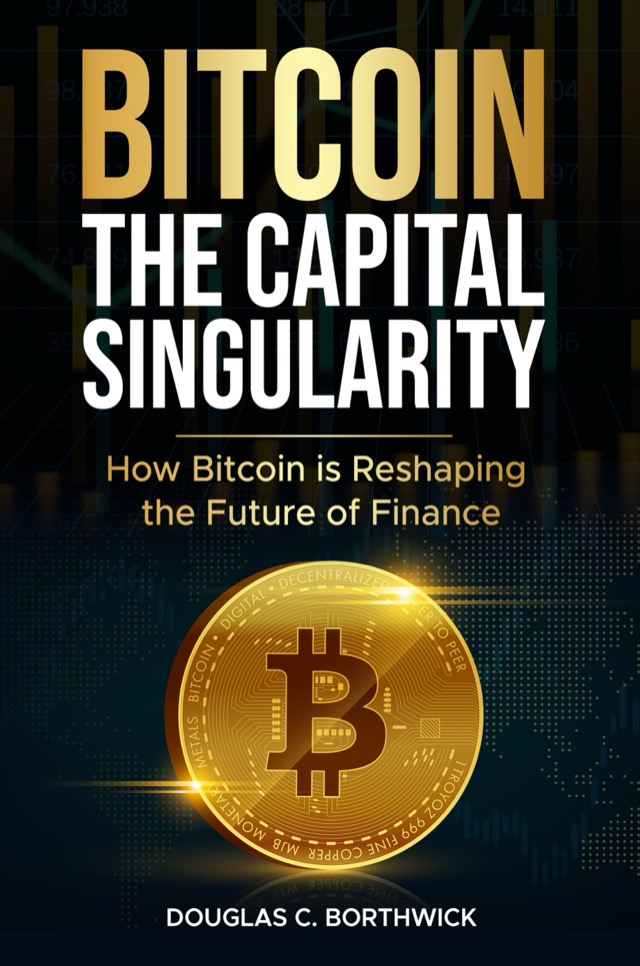
Old Men, New Money co-host Douglas Borthwick has written on this in depth.
Watch Our Bitcoin Conversations
Industry experts discuss why Bitcoin has value and where it's headed.



Continue Learning
Want the Full Picture?
Join 38,000+ professionals getting weekly crypto and finance analysis from Wall Street veterans — delivered free to your inbox.
The weekly briefing is free, always.