
What Is Tokenomics?
The economics behind every cryptocurrency. Tokenomics determines whether a project is built to last or designed to enrich insiders — here's how to read the blueprint.
Subscribe Free. The weekly briefing is free, always.
Tokenomics: The Economics of Crypto
Tokenomics — a combination of "token" and "economics" — is the study of how a cryptocurrency's economic design works. It covers everything from supply mechanics to distribution schedules to the incentive structures that drive behavior within a network.
In traditional finance, when you analyze a company, you study its revenue, margins, debt structure, and capital allocation. In crypto, the equivalent analysis is tokenomics. It tells you how value is created, distributed, and sustained within a protocol. Get this right, and you understand the fundamental forces that will drive a token's price over time. Get it wrong, and no amount of clever technology will save your investment.
We've spent decades analyzing financial instruments on Wall Street. Tokenomics is simply the crypto-native version of the same discipline — understanding what you own and why it should (or shouldn't) be worth something.
Supply: The Most Important Number
Supply is the foundation of tokenomics. If you understand nothing else, understand supply. There are three numbers you need to know for any token, and they are explained in detail in our guide to token supply:
- Max supply: The absolute maximum number of tokens that will ever exist. Bitcoin's max supply is 21 million — hard-coded and unchangeable. Some tokens have no max supply at all, meaning new tokens can be minted indefinitely.
- Total supply: The number of tokens that have been created so far, including those that are locked, staked, or otherwise not available for trading.
- Circulating supply: The number of tokens actually available on the open market right now. This is the number that matters most for calculating a meaningful market cap.
The gap between circulating supply and total supply is critical. A token might look cheap based on its circulating supply market cap, but if 80% of tokens are locked and set to unlock over the next two years, that incoming supply will create enormous selling pressure. This is one of the most common traps in crypto investing.
Token Burns and Deflation
A token burn permanently removes tokens from circulation. It's the crypto equivalent of a stock buyback — it reduces supply, and if demand holds steady, each remaining token becomes more valuable.
Burns work by sending tokens to a "burn address" — a wallet address that nobody controls and from which tokens can never be recovered. Once burned, those tokens are gone forever.
Some protocols burn tokens on a fixed schedule. Others burn a percentage of transaction fees. Ethereum's EIP-1559 upgrade, implemented in August 2021, introduced a base fee burn on every transaction. During periods of high network activity, more ETH is burned than created, making the token deflationary. Since the upgrade, billions of dollars worth of ETH have been permanently destroyed.
Not all burns are created equal. A project that burns unsold ICO tokens isn't really reducing supply in any meaningful way — those tokens were never going to be sold anyway. What matters is whether the burn mechanism consistently removes tokens from active circulation in a way that's tied to real usage.
Inflation Schedules and Emission Rates
Most tokens don't appear all at once. They're released over time according to a predetermined emission schedule. Understanding this schedule is essential because it tells you exactly how much new supply will hit the market and when.
Bitcoin has the most famous emission schedule in crypto. Miners earn new bitcoin as block rewards, but that reward is cut in half every 210,000 blocks (roughly every four years) in an event called the "halving." When Bitcoin launched in 2009, miners earned 50 BTC per block. After the April 2024 halving, they earn 3.125 BTC. This predictable, declining emission is what gives Bitcoin its disinflationary monetary policy.
Other protocols take different approaches. Some have linear emission — the same number of tokens released each month. Others have aggressive early emission, front-loading rewards to bootstrap adoption, then tapering off. The key question is always: does the rate of new supply creation exceed the rate of new demand? If it does, the price faces structural headwinds.
Utility: What Does the Token Actually Do?
A token with no utility is just a number on a screen. The best tokenomics in the world won't save a token that nobody needs to use. Utility creates organic, sustained demand — the kind that supports price without relying on speculation.
Common forms of token utility include:
- Transaction fees: Using the network costs tokens. On Ethereum, every smart contract interaction requires ETH for gas fees. This creates constant demand for ETH as long as people use the network.
- Access: Some tokens grant access to a product, service, or platform feature. Think of them as membership credentials — you need to hold or spend the token to participate. This is the foundation of token-gated commerce — where holding a token unlocks discounts, exclusive content, or premium services.
- Collateral: In decentralized finance (DeFi), tokens are used as collateral for loans, liquidity pools, and other financial instruments.
- Medium of exchange: Some tokens function as money within their ecosystem — used to pay for goods, services, or computational resources.
When evaluating utility, ask a simple question: does anyone need to buy this token to accomplish something they want to do? If the answer is no, demand is purely speculative, and speculative demand doesn't last.
Governance: Voting Rights and DAOs
Governance tokens give holders the right to vote on protocol decisions — fee structures, treasury allocations, technical upgrades, and strategic direction. In effect, they function like shares with voting rights.
Many protocols are governed by Decentralized Autonomous Organizations (DAOs), where token holders collectively make decisions without a centralized leadership team. Uniswap's UNI token, for example, grants holders the right to vote on how the protocol evolves — including whether to activate a fee switch that would direct trading revenue to token holders.
Governance sounds democratic, but the reality is more nuanced. In most DAOs, a small number of large holders (often the founding team and early investors) control the majority of voting power. Before treating a governance token as a "stake in the company," check the distribution of voting power. If five wallets control 60% of votes, the governance is decentralized in name only.
Staking Incentives
Staking allows token holders to lock up their tokens to help secure the network (in proof-of-stake systems) or to participate in protocol operations. In return, they earn rewards — typically paid in additional tokens.
Staking serves multiple purposes in tokenomics. It reduces circulating supply (locked tokens can't be sold), aligns holders' incentives with the network's success, and distributes new tokens to participants who actively support the protocol. On the Ethereum blockchain, validators must stake 32 ETH to participate in block validation, earning rewards in the process.
However, staking rewards are not free money. If the staking yield is 8% but the token's supply inflation is 10%, you're actually losing ground in real terms. Always compare the staking yield to the emission rate. Sustainable staking rewards come from real protocol revenue (transaction fees), not just from minting new tokens — which is simply dilution dressed up as income.
Vesting Schedules: Who Gets What, and When
Most crypto projects allocate tokens across several groups: the founding team, early investors, advisors, the community (via airdrops or rewards), and a treasury or foundation. Vesting schedules determine when each group can actually sell their tokens.
A standard vesting schedule might look like this:
- Team tokens: 12-month cliff (no tokens unlock for the first year), then linear vesting over 3-4 years.
- Investor tokens: 6-12 month cliff, then monthly or quarterly unlocks over 2-3 years.
- Community/ecosystem tokens: Released gradually through staking rewards, grants, or liquidity mining programs over 4-10 years.
- Treasury: Held by the protocol's DAO or foundation, released by governance vote as needed.
Vesting schedules exist to prevent insiders from dumping tokens on retail investors immediately after launch. A project where the team has no lockup, or where 40% of supply unlocks within six months, is sending a clear signal about its priorities. Always check the unlock schedule before investing — large upcoming unlocks are predictable selling pressure.
How to Read a Tokenomics Chart
Most crypto projects publish a tokenomics chart — typically a pie chart showing allocation and a line chart showing the emission schedule over time. Here's how to read them:
The allocation chart shows who gets what percentage of total supply. Look for the balance between insiders (team, investors, advisors) and the community (public sale, ecosystem rewards, airdrops). A healthy project typically allocates 50% or more to the community and ecosystem, with team and investors together holding no more than 30-35%.
The emission schedule shows how circulating supply grows over time. Look for cliff events — moments when large blocks of tokens unlock suddenly. These create predictable periods of selling pressure. A smooth, gradual emission curve is generally healthier than one with sharp spikes.
Key numbers to check: fully diluted valuation (FDV) divided by current market cap tells you how much dilution is ahead. If FDV is 10x the current market cap, 90% of tokens haven't entered circulation yet — and when they do, they'll put downward pressure on price.
Red Flags in Tokenomics
After analyzing hundreds of projects, certain patterns consistently predict failure. If you're learning how to evaluate crypto projects, watch for these warning signs:
- No max supply with high emission: If tokens can be minted indefinitely with no burn mechanism, inflation will erode value over time.
- Insider-heavy allocation: If the team and early investors control more than 40% of total supply, the project is designed to enrich insiders.
- Short or no vesting: Team tokens with no lockup period? That's a project built to sell, not to build.
- No real utility: If the token exists only to speculate on, there's no organic demand floor. When speculation fades, so does the price.
- Opaque treasury management: If you can't verify on-chain where treasury funds are going, someone may be helping themselves.
- Yield that seems too good: Annual staking yields above 20-30% are almost always funded by aggressive inflation. The rewards look generous until you realize the token price is declining faster than your balance is growing.
Real-World Examples
Bitcoin: The Gold Standard
Bitcoin's tokenomics are the simplest and most elegant in crypto. Fixed supply of 21 million. Predictable emission schedule via halvings. No pre-mine, no team allocation, no venture investors. The founder (Satoshi Nakamoto) hasn't moved their estimated 1 million BTC in over 17 years. Bitcoin's tokenomics are the benchmark against which all others are measured.
Ethereum: Deflationary by Design
Ethereum doesn't have a fixed supply cap, but EIP-1559 introduced a burn mechanism that destroys a portion of every transaction fee. Combined with the transition to proof-of-stake (which dramatically reduced new issuance), ETH has become net deflationary during periods of high network usage. This is a case study in how tokenomics can evolve — Ethereum's monetary policy has changed multiple times since launch, each time adapting to serve the network's needs.
The Bottom Line
Tokenomics is the financial architecture of a cryptocurrency. It tells you whether a project's economic design supports long-term value creation or whether it's structured to benefit insiders at the expense of later participants. You don't need a finance degree to evaluate it — you need to ask the right questions: How many tokens exist? Who holds them? When can they sell? What creates demand?
In traditional markets, you'd never buy a stock without understanding the company's capital structure, share count, and insider holdings. The same discipline applies in crypto. Tokenomics is how you apply it.
We've watched markets long enough to know that unsustainable economics always unwind — whether it's in equities, bonds, or tokens. The math doesn't care about narratives. Learn to read the numbers before you commit capital.
From the Author
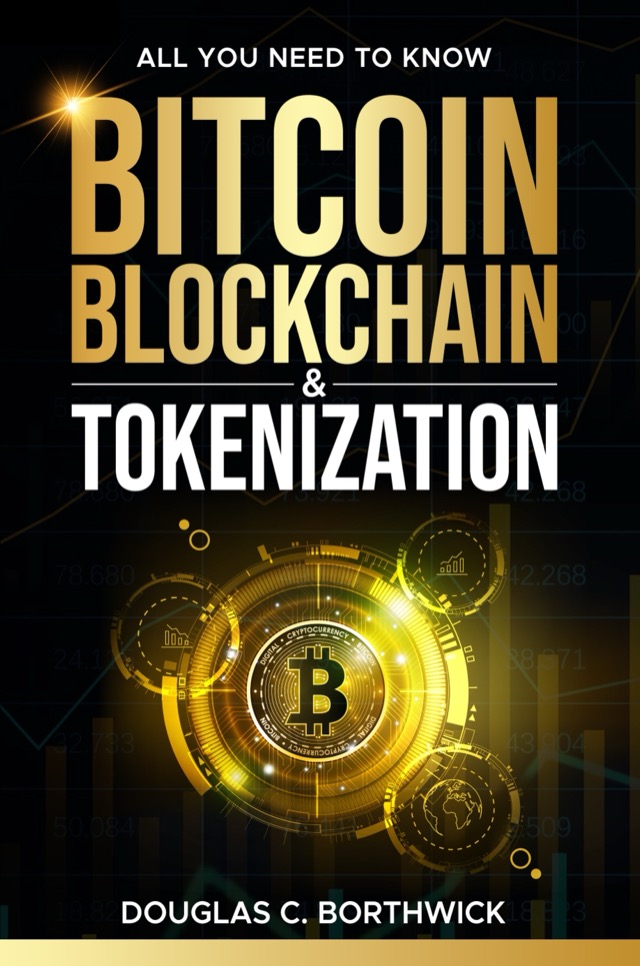
Old Men, New Money co-host Douglas Borthwick has written on this in depth.
Watch: Tokenization Deep Dives
Expert conversations on tokenomics and digital asset design.

Continue Learning
Want the Full Picture?
Join 38,000+ professionals getting weekly crypto and finance analysis from Wall Street veterans — delivered free to your inbox.
The weekly briefing is free, always.