
What Are Real-World Assets (RWA)?
BlackRock, Franklin Templeton, and JPMorgan are putting trillions of dollars of traditional assets onto blockchains. Here's what real-world asset tokenization means, how it works, and why it matters.
Subscribe Free. The weekly briefing is free, always.
The Biggest Shift in Finance You're Not Hearing About
While most crypto headlines focus on Bitcoin price swings and meme coins, the largest financial institutions in the world are quietly rebuilding the plumbing of global finance on blockchain infrastructure. The vehicle for this transformation is called real-world asset tokenization — or RWA.
Real-world asset tokenization is the process of creating a digital token on a blockchain that represents ownership of a traditional asset: a U.S. Treasury bill, a share of stock, a piece of real estate, or a private equity position. The underlying asset still exists in the real world, but its ownership record moves to a blockchain — enabling faster settlement, fractional ownership, and 24/7 trading.
As of early 2026, the total value of tokenized real-world assets on public blockchains exceeds $15 billion, up from under $2 billion in 2023. And that's just the beginning. BlackRock's CEO Larry Fink has called tokenization “the next generation for markets.” Boston Consulting Group estimates the tokenized asset market could reach $16 trillion by 2030.
How RWA Tokenization Works
The basic mechanics are straightforward. An asset manager takes a real-world asset — let's say a portfolio of U.S. Treasury bills — and creates a corresponding token on a blockchain like Ethereum. Each token represents a fractional ownership share of that portfolio.
The process involves several key steps:
Asset selection and structuring. The issuer chooses which assets to tokenize and establishes the legal structure. This typically involves creating a special purpose vehicle (SPV) that holds the underlying assets and issues tokens representing shares.
Smart contract deployment. The token is created on a blockchain using a smart contract that encodes the rules: who can hold the token, how dividends or yield are distributed, and what compliance requirements must be met. This is where tokenomics meets traditional finance.
Compliance and KYC/AML. Unlike most DeFi tokens, RWA tokens are typically regulated securities. Holders must pass identity verification. Smart contracts can enforce transfer restrictions automatically — you can't send a regulated token to a non-verified wallet.
Ongoing management. The issuer continues to manage the underlying assets, with yield, dividends, or distributions flowing to token holders via the blockchain — often daily instead of quarterly.
Who's Doing This?
The institutional players entering RWA tokenization read like a who's who of global finance:
BlackRock launched BUIDL (BlackRock USD Institutional Digital Liquidity Fund) on Ethereum in early 2024. It invests in U.S. Treasury bills and became the largest tokenized Treasury fund within months. BUIDL demonstrated that the world's largest asset manager sees blockchain as production-ready infrastructure, not a science experiment.
Ondo Finance took the next step in 2026, putting BlackRock's iShares S&P 500 ETF and individual stocks like Micron on-chain — tokenized exposure to mainstream equities, not just Treasuries. The shares are portable; the open question is what a holder can actually do with them beyond trading.
Franklin Templeton launched its OnChain U.S. Government Money Fund (FOBXX) on the Stellar and Polygon blockchains. It was one of the first registered funds to use blockchain for transaction processing and share ownership recording.
JPMorgan built Onyx Digital Assets, a blockchain platform for tokenized collateral management. In 2023, BlackRock and Barclays used it to tokenize money market fund shares as collateral for derivatives trades — settling in minutes instead of days.
KKR, Hamilton Lane, and Apollo have all tokenized portions of their private equity funds, allowing smaller investors to access asset classes that previously required $5 million+ minimums.
What Types of Assets Are Being Tokenized?
U.S. Treasuries and Government Bonds
This is the largest and fastest-growing RWA category. Tokenized Treasury products let investors earn yield on U.S. government debt while holding a blockchain-native asset that settles instantly. It's essentially a better savings account for the crypto ecosystem — backed by the U.S. government but living on-chain. Banks are moving in the same direction: one institution tokenized £250M in customer deposits, a reminder that RWA token holders ultimately need real utility from what they hold.
Real Estate
Real estate tokenization creates fractional ownership of properties. Instead of needing $500,000 to invest in a commercial building, you could buy $500 worth of tokens representing a share. Platforms like RealT and Lofty are already offering tokenized rental properties with daily yield distributions.
Private Equity and Venture Capital
Traditionally, private equity has been accessible only to institutional investors and ultra-high-net-worth individuals. Tokenization lowers the minimums dramatically while providing liquidity for an asset class that typically locks up capital for 7–10 years.
Commodities
Gold, carbon credits, and other commodities are being tokenized. Paxos Gold (PAXG) and Tether Gold (XAUT) let you hold tokenized gold backed by physical reserves in London vaults. Each token represents one troy ounce.
Why Does This Matter?
Traditional financial markets work, but they're slow and expensive. Settling a stock trade takes T+1 (one business day). Settling a real estate transaction takes 30–90 days. Moving money internationally takes days and costs percentage points in fees.
Blockchain infrastructure fixes these problems:
Instant settlement. Tokenized assets settle in minutes, not days. This eliminates counterparty risk and frees up capital that's currently trapped in the settlement process.
24/7 markets. Tokenized assets trade around the clock, not just during market hours. A tokenized Treasury fund can be redeemed at 2 AM on a Sunday.
Fractional ownership. Tokenization divides expensive assets into affordable pieces. A $50 million commercial building becomes accessible to retail investors at any amount.
Automated compliance. Smart contracts enforce regulatory requirements programmatically. Transfer restrictions, holding periods, accreditation checks, and reporting happen automatically — reducing costs and human error.
Global access. Stablecoin rails enable anyone with an internet connection and a verified identity to access institutional-grade financial products. A teacher in Jakarta can earn yield on U.S. Treasuries the same way a hedge fund in New York does.
RWA and the Security Token Connection
RWA tokenization didn't start with BlackRock. The concept has roots in the security token offering (STO) movement that began in 2018–2019. Security tokens are blockchain tokens that represent regulated securities — essentially the first generation of RWA.
The first SEC-registered security token IPO raised $85 million from over 7,200 investors across 74 countries — years before BlackRock entered the space. What's changed is that the infrastructure has matured, regulatory clarity has improved, and the world's largest institutions now see the opportunity.
RWA and DeFi: The Collision Course
One of the most interesting developments is the intersection of tokenized real-world assets and decentralized finance (DeFi). BlackRock's BUIDL fund was integrated with Uniswap — a decentralized exchange — allowing BUIDL holders to swap tokens without a traditional broker.
This convergence means that institutional-grade assets are flowing into DeFi protocols, and DeFi infrastructure is being adopted by traditional institutions. The line between “crypto finance” and “regular finance” is blurring faster than most people realize. And as tokenized assets reach retail holders, the next frontier is giving those holders real-world utility — discounts, access, and loyalty rewards verified automatically through their on-chain holdings.
For AI agents that need to hold and manage value, tokenized RWAs offer something that volatile crypto assets cannot: stable, yield-bearing instruments that can be held and transacted programmatically. An AI treasury agent could allocate funds across tokenized Treasuries, manage collateral in DeFi protocols, and rebalance positions — all autonomously.
Risks to Understand
RWA tokenization isn't without challenges:
Regulatory uncertainty. While the SEC has provided some clarity on tokenized securities, the regulatory framework is still evolving. Different jurisdictions have different rules, and compliance requirements can limit who can hold which tokens.
Counterparty risk. Tokenized assets are only as good as the issuer behind them. If the entity managing the underlying assets fails, the tokens lose value regardless of the blockchain they sit on.
Liquidity. Many tokenized assets still have limited secondary markets. Buying a tokenized Treasury fund from BlackRock is straightforward; selling it at 3 AM on a Saturday may still require finding a willing buyer.
Smart contract risk. The code governing these tokens can have vulnerabilities. While institutional-grade deployments are heavily audited, the risk is never zero.
Where This Is Going
Real-world asset tokenization is the clearest path to mass institutional adoption of blockchain technology. It doesn't require people to believe in a new currency or a new financial system. It simply takes the existing system and makes it faster, cheaper, and more accessible.
Parts of that future have already arrived. In July 2026, the DTCC — the plumbing of American equity markets — began production trades of tokenized Russell 1000 stocks. Next up: tokenized stocks bringing shareholders and customers into a single wallet, tokenized mortgages with daily interest accrual, and pension funds allocating to tokenized private equity. The infrastructure is already built. The regulatory frameworks are catching up. And the institutions are already in.
Understanding RWA is essential to understanding where crypto is actually going — not as a replacement for traditional finance, but as its upgrade layer.
From the Author
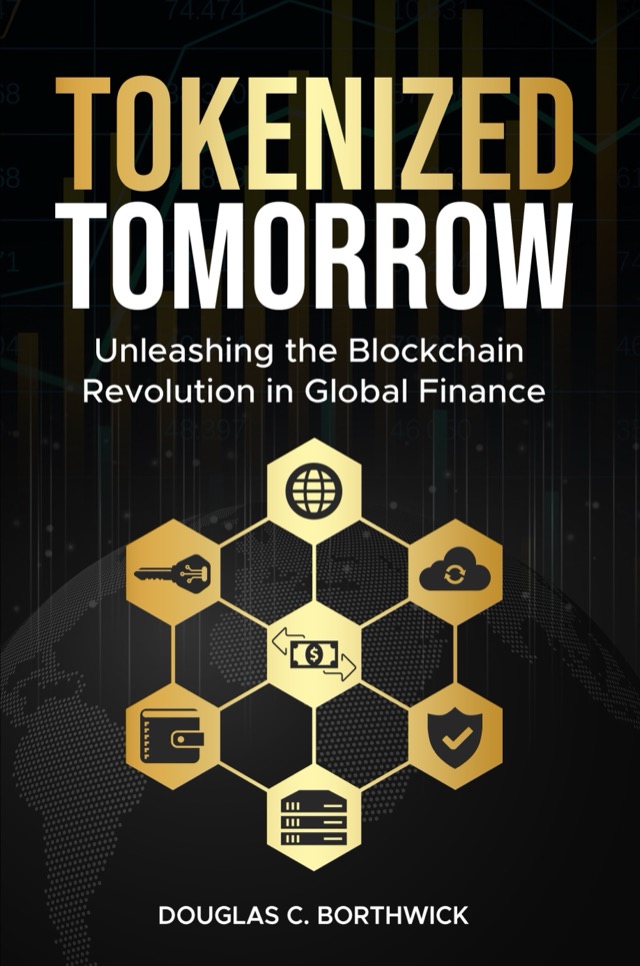
Old Men, New Money co-host Douglas Borthwick has written on this in depth.
Related Conversations
Industry leaders discuss the future of asset tokenization.
Continue Learning
Want the Full Picture?
Join 38,000+ professionals getting weekly crypto and finance analysis from Wall Street veterans — delivered free to your inbox.
The weekly briefing is free, always.