
What Is DeFi?
Decentralized finance is rebuilding the financial system from scratch — without banks. Here's how it works, what it's good at, and where the risks are.
Subscribe Free. The weekly briefing is free, always.
Finance Without the Middleman
DeFi — short for decentralized finance — is a collection of financial applications built on blockchain technology that replicate what banks, brokers, and exchanges do, but without the banks, brokers, and exchanges.
Want to earn interest on your savings? In traditional finance, you deposit money at a bank and they lend it out, keeping most of the profit. In DeFi, you lend directly to borrowers through a smart contract, and you keep the interest. Want to trade one asset for another? Instead of using a broker, you trade against a liquidity pool — a pot of funds provided by other users — and the trade executes automatically.
DeFi isn't a single product or company. It's an ecosystem of protocols — open-source software running on public blockchains (primarily Ethereum and Solana) that anyone can use, inspect, and build on. As of early 2026, over $150 billion in assets are locked in DeFi protocols globally.
How DeFi Actually Works
Every DeFi protocol is powered by smart contracts — programs deployed on a blockchain that execute automatically when certain conditions are met. Think of a smart contract as a vending machine: you put in the input, the code executes, and you get the output. No human judgment, no approval process, no business hours.
Smart contracts are transparent (anyone can read the code), immutable (once deployed, they can't be secretly changed), and permissionless (anyone with a crypto wallet can interact with them). This combination of properties is what makes DeFi fundamentally different from traditional finance — the rules are visible and enforced by code, not by institutions.
The Core DeFi Building Blocks
Decentralized Exchanges (DEXs)
Decentralized exchanges let you trade crypto assets without a centralized intermediary like Coinbase or Binance. The largest is Uniswap, which has processed over $2 trillion in cumulative volume.
Instead of matching buyers and sellers through an order book, most DEXs use automated market makers (AMMs). Liquidity providers deposit pairs of tokens into pools, and traders swap against these pools. Prices adjust algorithmically based on supply and demand in the pool. It sounds complex, but the user experience is simple: connect your wallet, pick the tokens, and swap.
Lending and Borrowing
DeFi lending protocols like Aave and Compound let you earn interest by depositing crypto assets, or borrow against your existing holdings without selling them.
All DeFi lending is overcollateralized — you must deposit more than you borrow. If you want to borrow $1,000, you might need to deposit $1,500 in collateral. If your collateral value drops below a threshold, the protocol automatically liquidates your position to protect lenders. There's no credit check, no application, and no waiting period — it's all instant and automated.
Stablecoins in DeFi
Stablecoins are the connective tissue of DeFi. They provide a dollar-denominated unit of account in an ecosystem that would otherwise be entirely denominated in volatile crypto assets. USDC and USDT are the most widely used, while DAI is a crypto-backed stablecoin generated through overcollateralized positions on the MakerDAO protocol.
Yield Aggregators
Protocols like Yearn Finance automatically move your assets between different DeFi strategies to maximize returns. Think of them as robo-advisors for DeFi — they optimize your yield without you needing to manually monitor dozens of protocols.
DeFi vs Traditional Finance
| Feature | Traditional Finance | DeFi |
|---|---|---|
| Access | Requires ID, credit check, bank account | Anyone with a crypto wallet |
| Hours | Business hours, weekdays | 24/7/365 |
| Transparency | Opaque — trust the institution | Fully transparent — read the code |
| Settlement | T+1 to T+3 (days) | Seconds to minutes |
| Custody | Bank holds your assets | You hold your own keys |
| Insurance | FDIC, SIPC protections | Limited or none |
| Recourse | Customer support, legal system | Code is law — limited recourse |
Why DeFi Matters
DeFi matters because it demonstrates that financial services can be provided without traditional intermediaries. This has implications far beyond crypto:
Financial inclusion. An estimated 1.4 billion adults worldwide lack access to basic banking services. DeFi requires only an internet connection and a crypto wallet — no minimum balance, no credit history, no physical branch.
Composability. DeFi protocols are like Lego blocks — they can be stacked and combined in ways their creators never imagined. A lending protocol can plug into a DEX, which plugs into a yield aggregator, creating financial products that would take years to build in traditional finance.
Institutional interest. The line between DeFi and traditional finance is blurring. BlackRock's tokenized Treasury fund (BUIDL) was integrated with Uniswap. JPMorgan has experimented with DeFi lending protocols. Visa is settling transactions using stablecoins on Ethereum. The institutions aren't just watching DeFi — they're using it.
AI agent infrastructure. AI agents that need to manage money autonomously will rely on DeFi infrastructure — they can interact with smart contracts directly, without needing human approval or bank relationships. Token holdings can even gate access to services: token-gated APIs use on-chain balances as the authentication layer, replacing API keys with wallet verification.
The Risks — And They're Real
DeFi offers powerful capabilities, but it comes with risks that don't exist in traditional finance:
Smart contract risk. If there's a bug in the code, funds can be drained. DeFi hacks have cost users billions of dollars. Major protocols are extensively audited, but no audit guarantees safety.
No safety net. There's no FDIC insurance, no fraud department, and no customer service. If you send funds to the wrong address or approve a malicious contract, the money is gone. Self-custody means self-responsibility.
Complexity. DeFi user interfaces have improved dramatically, but the underlying mechanics are complex. Understanding impermanent loss, liquidation thresholds, and protocol governance requires real study.
Regulatory uncertainty. Governments are still figuring out how to regulate DeFi. Some jurisdictions are embracing it; others are restricting it. This creates uncertainty for both users and builders.
Getting Started with DeFi
If you want to explore DeFi, start small and start safe:
1. Understand the fundamentals first. Read our guides on blockchain, wallets, and stablecoins before putting any money into DeFi.
2. Start with established protocols. Uniswap, Aave, and Lido are battle-tested with years of operation and billions in deposits. Newer protocols offer higher yields but carry higher risk.
3. Use a hardware wallet. If you're interacting with DeFi, a hardware wallet adds a critical layer of security.
4. Never invest more than you can afford to lose. This applies to all of crypto, but especially to DeFi.
From the Author
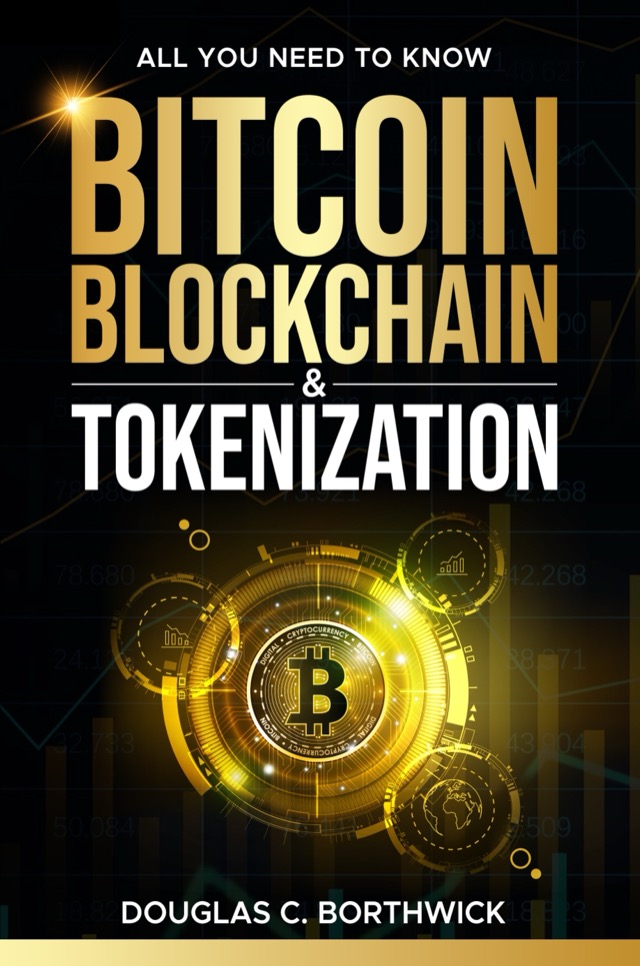
Old Men, New Money co-host Douglas Borthwick has written on this in depth.
Related Conversations
Deep dives on blockchain technology and digital finance.



Continue Learning
Want the Full Picture?
Join 38,000+ professionals getting weekly crypto and finance analysis from Wall Street veterans — delivered free to your inbox.
The weekly briefing is free, always.