
Private Credit Tokenization Explained
The $1.7 trillion private credit market is moving onto the blockchain. Here's how tokenization is transforming corporate lending, who's leading it, and what it means for investors — from a Wall Street veteran who served as CMO and CBO for the first IPO on the blockchain.
Subscribe Free. The weekly briefing is free, always.
What Is Private Credit?
Private credit is lending that happens outside of the public bond markets and traditional banking system. Instead of a corporation issuing bonds on the New York Stock Exchange or borrowing from JPMorgan, it borrows directly from specialized investment funds. These are loans negotiated privately between borrowers and lenders — hence the name.
The asset class encompasses several forms of lending: direct lending (senior secured loans to mid-market companies), mezzanine debt (subordinated loans that sit between senior debt and equity), distressed credit (loans to companies in financial difficulty), and specialty finance (asset-backed lending against receivables, equipment, or real estate).
Private credit has exploded over the past decade. The market grew from roughly $400 billion in 2015 to over $1.7 trillion by 2025, driven by banks retreating from mid-market lending after the 2008 financial crisis and investors chasing higher yields in a low-interest-rate environment. Firms like Apollo, Ares Management, Blackstone, and KKR have built enormous direct lending businesses.
But there's a problem. Private credit is one of the most illiquid asset classes in existence — and that illiquidity creates real costs for investors.
The Illiquidity Problem
If you buy a stock, you can sell it in seconds. If you buy a Treasury bond, you can sell it the same day. If you invest in a private credit fund, your money is typically locked up for 3 to 7 years.
This illiquidity exists because private loans are bespoke instruments — individually negotiated terms, unique covenants, and limited standardization. There's no exchange where you can list a $5 million direct loan to a mid-market manufacturing company and find a buyer at the click of a button.
The consequences are significant:
High minimums. Most private credit funds require $1 million or more to invest. Many institutional vehicles start at $5 million or $10 million. This effectively shuts out retail investors and smaller institutions from an asset class that has consistently delivered 8–12% annual returns.
Long lock-ups. Capital is committed for years, with limited or no ability to redeem early. Investors must accept a significant opportunity cost — that money can't be redeployed as market conditions change.
Opaque reporting. Performance data on private credit portfolios is reported quarterly at best, and the methodology for valuing positions varies between managers. An investor often doesn't know the real-time health of their portfolio.
Limited secondary market. When secondary transactions do occur, they typically happen at significant discounts (10–20% below net asset value) and require weeks of legal work to transfer.
This is where blockchain technology enters the picture.
Why Tokenize Private Credit?
Tokenization addresses the core structural problems of private credit markets. By representing loan positions as digital tokens on a blockchain, the asset class gains capabilities that were previously impossible.
Fractional access. A $100 million private credit fund position can be divided into tokens representing much smaller units — potentially as low as $100. This opens the asset class to retail investors, registered investment advisors, and smaller institutions that were previously priced out. The same economics that let you buy a fractional share of Amazon stock on Robinhood can let you own a fraction of a diversified corporate loan portfolio.
Faster settlement. Traditional private credit transfers take weeks of legal review. Tokenized transfers settle in minutes on the blockchain. The smart contract encodes the transfer restrictions and compliance checks that used to require armies of lawyers.
Transparent performance. On-chain servicing means loan payments, default events, and portfolio performance can be tracked in real time. Instead of waiting for a quarterly PDF from your fund administrator, you can see exactly how the underlying loans are performing — every payment, every covenant test, every day.
Automated distributions. Yield and principal payments can be distributed to token holders automatically via smart contracts. No manual wire transfers. No quarterly distribution delays. The interest payment hits your wallet the moment the borrower pays — whether that's Tuesday at noon or Sunday at midnight.
Composability with DeFi. Tokenized credit positions can interact with DeFi protocols — used as collateral for borrowing, traded on decentralized exchanges, or combined with other real-world assets in diversified portfolios. This composability is something traditional private credit simply cannot offer.
How It Works Technically
The technical architecture of tokenized private credit follows a pattern similar to other security token structures, but with nuances specific to debt instruments.
Special purpose vehicle (SPV). The issuer creates an SPV — a legal entity that holds the underlying loans. The SPV issues tokens representing fractional ownership of the loan portfolio. This legal structure isolates the credit assets from the issuer's balance sheet and provides bankruptcy remoteness.
Smart contract deployment. The token smart contract is deployed on a blockchain (typically Ethereum, Polygon, or a permissioned chain like Provenance). The contract encodes critical parameters: interest rate, payment schedule, maturity date, transfer restrictions, and investor eligibility requirements.
KYC/AML and compliance. Because tokenized credit instruments are securities, holders must be verified. The smart contract integrates with identity verification providers — only whitelisted addresses can hold or receive tokens. This is where tokenized private credit differs fundamentally from permissionless DeFi lending — there's a real compliance layer.
On-chain servicing. Loan servicing data — payment receipts, covenant compliance, borrower reporting — is recorded on-chain or anchored to the blockchain via cryptographic hashes. This creates an immutable audit trail and enables automated triggers: if a borrower misses a payment, the smart contract can automatically adjust the token's status or trigger notification to holders.
Distribution mechanics. When borrowers make interest or principal payments, the funds flow through a stablecoin (typically USDC) into the smart contract, which automatically distributes payments pro rata to token holders. No fund administrators, no wire transfers, no reconciliation — just code executing as programmed.
Who's Doing This?
The tokenized private credit market spans both traditional finance giants and crypto-native protocols. Each brings different strengths — and different approaches.
Traditional Finance Players
Apollo Global Management has been one of the most aggressive traditional firms in exploring tokenization. With over $600 billion in assets under management, Apollo has partnered with blockchain platforms to tokenize portions of its credit funds, aiming to bring its institutional-grade underwriting to a broader investor base.
KKR tokenized a portion of its Health Care Strategic Growth Fund on the Avalanche blockchain through Securitize. For the first time, accredited investors could access a KKR fund with significantly lower minimums than the traditional $5–10 million entry point.
Hamilton Lane has been a pioneer in fund tokenization, offering tokenized access to its private equity and credit strategies through partnerships with Securitize and Figure. The firm has consistently articulated that tokenization isn't a novelty — it's a structural improvement to how private markets operate.
Figure Technologies has built the Provenance Blockchain specifically for financial asset tokenization. Figure has originated billions of dollars in home equity lines of credit (HELOCs) on-chain, demonstrating that blockchain-native lending can work at institutional scale. Their approach — purpose-built chain, full regulatory compliance, institutional partnerships — represents one model for how tokenized credit can scale.
Crypto-Native Protocols
Centrifuge is one of the oldest and most established on-chain credit protocols. Centrifuge connects real-world borrowers (factoring companies, real estate lenders, trade finance operations) with DeFi liquidity. Borrowers tokenize their loan portfolios, and investors provide capital through the protocol. Centrifuge pools have been integrated with MakerDAO, Aave, and other major DeFi platforms.
Maple Finance operates institutional lending markets on-chain. Maple's model uses pool delegates — professional credit managers — who underwrite borrowers and manage lending pools. Institutional borrowers (market makers, trading firms, crypto funds) borrow from these pools, and lenders earn yield. After a difficult 2022 that included defaults, Maple restructured and relaunched with stricter underwriting and overcollateralization requirements.
Goldfinch focuses on lending to businesses in emerging markets — the kind of borrowers that traditional banks don't serve well. Goldfinch's protocol connects global DeFi capital with local lending partners who originate and service loans on the ground. It's a model that demonstrates how tokenization can expand credit access, not just restructure existing markets.
Institutional DeFi Lending
One of the most significant developments in tokenized credit is the emergence of institutional-grade DeFi lending — the convergence of traditional credit underwriting with DeFi infrastructure.
Aave Arc launched as a permissioned version of the Aave protocol, designed specifically for institutional participants. Unlike permissionless Aave (where anyone with a wallet can lend or borrow), Aave Arc requires KYC verification through a whitelisting agent. This creates a DeFi lending environment that meets institutional compliance requirements while maintaining the efficiency advantages of smart contract-based lending.
MakerDAO's RWA vaults represent the largest experiment in connecting DeFi with traditional credit markets. MakerDAO — the protocol behind the DAI stablecoin — has allocated billions of dollars to real-world asset vaults, including tokenized U.S. Treasuries and private credit positions. This means that a decentralized protocol is acting as a lender to real-world borrowers, with smart contracts managing the collateral and loan terms.
The significance is hard to overstate. When MakerDAO allocates $500 million to a tokenized credit vault, it demonstrates that DeFi infrastructure can underwrite real economic activity — not just crypto-to-crypto speculation. This is the “so what” moment for DeFi skeptics.
Benefits for Different Participants
For Investors
The most immediate benefit is access. Private credit has delivered consistent 8–12% annual returns — significantly above public fixed income — but those returns have been available only to institutions and ultra-high-net-worth individuals. Tokenization can bring minimums down from $1 million to $100, opening the asset class to accredited investors and eventually (with regulatory evolution) retail investors.
Beyond access, tokenization provides transparency. On-chain servicing means investors can monitor loan performance in real time instead of relying on quarterly reports. They can see every payment, every default, every covenant test — independently verifiable on the blockchain.
For Borrowers
Tokenized lending can reduce the cost of capital by eliminating layers of intermediation. A mid-market company borrowing through a tokenized protocol may face lower fees than borrowing through a traditional private credit fund, because the smart contract replaces fund administrators, transfer agents, and custody providers.
Tokenization also opens new capital pools. A borrower in Southeast Asia can access DeFi liquidity from global investors through protocols like Goldfinch — capital sources that wouldn't exist in traditional markets.
For Fund Managers
Tokenization reduces operational costs. Fund administration, investor communications, distribution management, and transfer processing can all be automated through smart contracts. A fund manager can spend more time on credit analysis and less time on back-office operations.
It also expands the addressable investor base. A manager who previously needed a minimum of $25 million per LP commitment can now accept capital in much smaller increments, dramatically increasing the potential number of investors.
Risks to Understand
Tokenized private credit carries all the risks of traditional private credit, plus additional risks specific to the blockchain infrastructure.
Credit risk. The fundamental risk hasn't changed: borrowers can default. Tokenization makes the asset more accessible and transparent, but it doesn't make the underlying loans safer. A poorly underwritten loan is a bad investment whether it's represented by a paper document or a blockchain token. The 2022 defaults on platforms like Maple Finance demonstrated this clearly — on-chain infrastructure doesn't protect against off-chain credit deterioration.
Smart contract risk. The code governing these instruments can contain vulnerabilities. While institutional deployments are heavily audited by multiple firms, the risk is never zero. A bug in the distribution logic or access control could result in loss of funds. This is a risk that simply doesn't exist in traditional private credit.
Regulatory uncertainty. The regulatory framework for tokenized debt instruments is still evolving. Different jurisdictions have different rules about who can hold tokenized securities, how they must be registered, and what disclosure is required. The regulatory landscape is improving — the GENIUS Act and other 2025–2026 legislation have provided more clarity — but significant uncertainty remains, particularly around cross-border transactions.
Liquidity risk. While tokenization enables secondary trading in theory, the actual secondary markets for tokenized credit are still thin. Having a token that represents your loan position doesn't guarantee you can sell it at fair value on any given day. Liquidity will improve as the market matures, but early participants should be prepared for limited secondary market activity.
Oracle and data risk. Tokenized credit relies on accurate off-chain data being brought on-chain — payment receipts, borrower financial statements, covenant compliance. If the data feed is inaccurate or manipulated, the smart contract will make decisions based on bad information. The “garbage in, garbage out” problem is real.
The Security Token Connection
Tokenized private credit didn't emerge from nothing. It builds on the security token infrastructure that has been developing since 2018. The first SEC-registered security token offering raised $85 million from over 7,200 investors across 74 countries — proving that regulated securities could be issued, traded, and managed on blockchain infrastructure.
That early work established the legal, technical, and regulatory patterns that today's tokenized credit platforms build upon: SPV structures for tokenized securities, smart contract-based transfer restrictions, on-chain compliance enforcement, and regulatory frameworks for digital securities.
Where This Is Going
Boston Consulting Group estimates the tokenized asset market could reach $16 trillion by 2030, with private credit expected to be one of the fastest-growing segments. The trajectory is being driven by several converging forces.
Regulatory tailwinds. Legislation like the GENIUS Act (which creates a federal framework for stablecoin regulation) and the increasing clarity from the SEC on digital securities are removing barriers to institutional adoption. As the rules become clearer, more traditional fund managers will tokenize their offerings.
Infrastructure maturation. The blockchain infrastructure for tokenized credit is rapidly improving. Purpose-built chains like Provenance, improved smart contract standards, institutional-grade custody solutions, and regulated marketplaces are making it easier to issue, manage, and trade tokenized credit instruments.
Institutional demand. The largest asset managers in the world have publicly committed to tokenization. When Apollo, KKR, BlackRock, and Hamilton Lane are all building tokenized products, the question isn't whether private credit will move on-chain — it's how fast.
DeFi convergence. As institutional DeFi matures, tokenized credit positions will become building blocks in a broader on-chain financial ecosystem. Imagine a world where a tokenized corporate loan can be used as collateral to borrow stablecoins, which are then deployed into other yield-generating strategies — all managed by smart contracts with transparent, auditable logic.
The private credit market has delivered excellent returns for decades, but only to those who could afford the entry price. Tokenization doesn't change the underlying economics of lending — it changes who gets to participate. That democratization, combined with improved transparency, faster settlement, and programmable automation, is why private credit tokenization matters. It's not a crypto experiment. It's the next evolution of how lending works.
From Our Blog & Podcast
From the Author
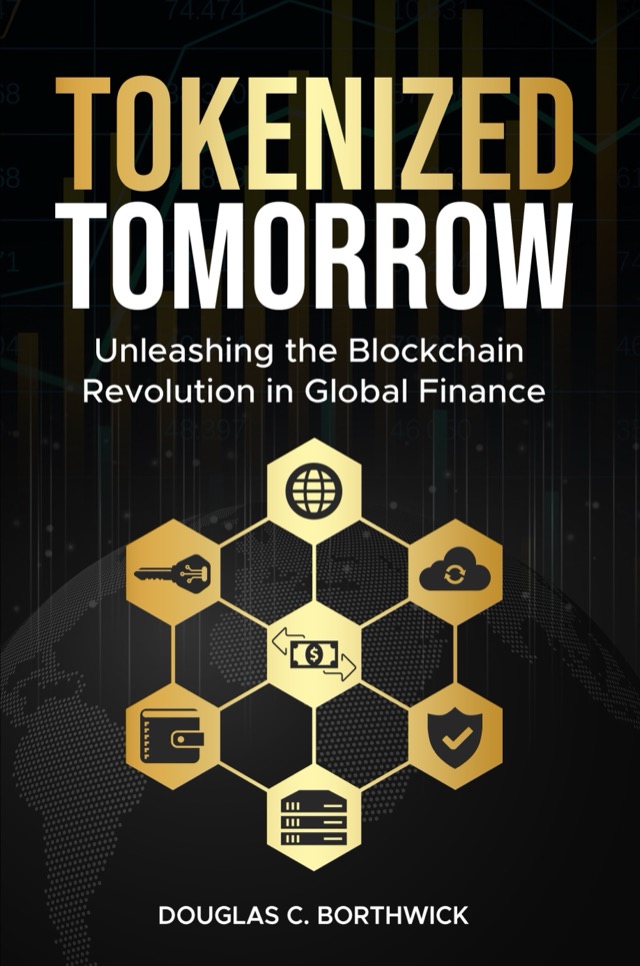
Old Men, New Money co-host Douglas Borthwick has written on this in depth.
Related Conversations
Industry leaders discuss the future of private credit and tokenization.



Continue Learning
Want the Full Picture?
Join 38,000+ professionals getting weekly crypto and finance analysis from Wall Street veterans — delivered free to your inbox.
The weekly briefing is free, always.