
Bitcoin ETFs Explained
How spot Bitcoin ETFs work, who offers them, what they cost, and whether you should buy one instead of holding Bitcoin directly — from Wall Street veterans who've watched these products evolve from impossible dream to market reality.
Subscribe Free. The weekly briefing is free, always.
What Is a Bitcoin ETF?
A Bitcoin ETF is an exchange-traded fund that holds Bitcoin and trades on a traditional stock exchange — just like shares of Apple, the S&P 500, or a gold ETF. You buy and sell it through a standard brokerage account. No crypto exchange. No private keys. No crypto wallet. Just a ticker symbol in your portfolio.
The concept is deceptively simple: a financial institution buys and holds a large quantity of Bitcoin, then issues shares that represent fractional ownership of that Bitcoin. When you buy a share of a spot Bitcoin ETF, you're buying a claim on real Bitcoin sitting in a custody vault. The ETF's price moves in lockstep with Bitcoin's market price.
For millions of investors — from retirement savers to pension funds — this was the missing bridge. They understood Bitcoin's potential but didn't want to navigate crypto exchanges, manage private keys, or worry about custody security. The Bitcoin ETF solved that problem overnight.
A Decade of Rejection: The Road to Approval
The idea of a Bitcoin ETF isn't new. Cameron and Tyler Winklevoss first filed for a Bitcoin ETF with the SEC in 2013. The SEC rejected it. Then rejected it again. Then rejected every other application that followed — from VanEck, from Bitwise, from Fidelity, from dozens of others. For nearly a decade, the SEC's position was consistent: the Bitcoin market is too susceptible to manipulation, too unregulated, and too immature for a spot ETF.
The irony was thick. In October 2021, the SEC approved the ProShares Bitcoin Strategy ETF (BITO), a futures-based Bitcoin ETF — even though futures products are more complex, more expensive, and arguably riskier for retail investors than a straightforward spot product. The message was clear: the SEC would allow Wall Street to profit from Bitcoin derivatives but wouldn't let ordinary investors access the actual asset through a simple, regulated product.
Everything changed in August 2023, when Grayscale Investments won a landmark lawsuit against the SEC. A federal appeals court ruled that the SEC's distinction between approving futures ETFs while rejecting spot ETFs was “arbitrary and capricious.” The court didn't force the SEC to approve a spot ETF — but it removed the legal basis for continued rejection.
On January 10, 2024, the SEC approved 11 spot Bitcoin ETFs simultaneously. It was the most consequential day in Bitcoin's financial history since the asset was created in 2009.
Spot ETFs vs Futures ETFs: Why It Matters
Understanding the difference between a spot ETF and a futures ETF is critical, because the two products behave very differently — especially over time.
Spot Bitcoin ETFs (like BlackRock's IBIT or Fidelity's FBTC) hold actual Bitcoin. When demand increases and new shares are created, the fund buys real Bitcoin on the open market. The ETF's price directly tracks Bitcoin's spot price, minus a small management fee.
Futures Bitcoin ETFs (like ProShares' BITO) hold Bitcoin futures contracts — agreements to buy or sell Bitcoin at a predetermined price on a future date. They never hold actual Bitcoin. When a futures contract approaches expiration, the fund must “roll” it — selling the expiring contract and buying the next one. This rolling process incurs costs, especially when futures prices are higher than spot prices (a condition called contango).
Over a single day, a futures ETF tracks Bitcoin's price reasonably well. Over months and years, the roll costs compound, causing the futures ETF to significantly underperform the spot price. Since BITO's launch, this tracking drag has cost investors meaningful returns compared to simply holding Bitcoin directly.
For long-term investors, spot ETFs are the unambiguously better product. They're simpler, cheaper, and track the underlying asset more accurately.
The Major Bitcoin ETF Issuers
The January 2024 approval launched the most competitive ETF fee war in history. Some of the largest asset managers on Earth raced to capture market share. Here are the key players:
- BlackRock — iShares Bitcoin Trust (IBIT): The clear winner. IBIT became the fastest-growing ETF in history, surpassing $50 billion in assets under management within its first year. BlackRock manages over $10 trillion globally — their entry gave Bitcoin an institutional stamp of approval that nothing else could.
- Fidelity — Fidelity Wise Origin Bitcoin Fund (FBTC): Fidelity was one of the earliest major institutions to take Bitcoin seriously, building its digital assets division years before the ETF approval. FBTC quickly became the second-largest spot Bitcoin ETF by assets.
- ARK Invest/21Shares — ARK 21Shares Bitcoin ETF (ARKB): Cathie Wood's ARK Invest partnered with 21Shares to launch a product targeting growth-oriented investors already comfortable with high-conviction technology bets.
- Bitwise — Bitwise Bitcoin ETF (BITB): Bitwise, a crypto-native asset manager, launched one of the lowest-fee options and has differentiated itself through research and transparency.
- VanEck — VanEck Bitcoin Trust (HODL): VanEck was among the earliest ETF applicants, having first filed in 2018. Their persistence through years of SEC rejection finally paid off.
- Invesco/Galaxy — Invesco Galaxy Bitcoin ETF (BTCO): A collaboration between Invesco, one of the world's largest ETF providers, and Galaxy Digital, a crypto-focused merchant bank.
- Franklin Templeton — Franklin Bitcoin ETF (EZBC): Notable for being one of the lowest-cost options and for Franklin Templeton's broader embrace of blockchain technology, including tokenized money market funds.
Grayscale also converted its existing Grayscale Bitcoin Trust (GBTC) — which had traded at significant premiums and discounts to NAV for years — into a spot ETF. However, its higher 1.5% fee led to substantial outflows as investors migrated to cheaper alternatives.
How Bitcoin ETFs Work: The Mechanics
Understanding the plumbing behind a Bitcoin ETF helps explain why the price tracks so closely to Bitcoin's spot price and why some concerns about manipulation are overblown.
The system relies on authorized participants (APs) — large financial institutions (like Jane Street or JP Morgan) that have agreements with the ETF issuer to create and redeem shares. Here's the cycle:
- Creation: When demand for the ETF rises and the share price threatens to trade above Bitcoin's net asset value (NAV), an AP delivers cash (or, in some structures, Bitcoin) to the fund in exchange for new ETF shares. The fund uses that cash to buy Bitcoin. This increases the supply of ETF shares and pushes the price back toward NAV.
- Redemption: When selling pressure causes the ETF share price to fall below NAV, the AP buys undervalued ETF shares on the open market and redeems them with the fund for the underlying Bitcoin (sold for cash). This reduces the supply of shares and pushes the price back up toward NAV.
This creation/redemption mechanism is the engine that keeps ETF prices tethered to the underlying asset. It's the same mechanism used by gold ETFs, S&P 500 ETFs, and every other exchange-traded fund. It's battle-tested.
Custody is handled by specialized custodians. Most spot Bitcoin ETFs — including BlackRock's IBIT and several others — use Coinbase Custody, a regulated, SOC-audited institutional custody platform that stores Bitcoin in cold storage with multi-signature security, insurance coverage, and segregated client accounts. Some funds, like Fidelity's FBTC, use their own proprietary custody infrastructure.
Fee Comparison Across Major ETFs
One of the biggest advantages of the competitive ETF launch was aggressive fee compression. Here's how the major spot Bitcoin ETFs compare:
| ETF | Ticker | Expense Ratio | Issuer |
|---|---|---|---|
| Franklin Bitcoin ETF | EZBC | 0.19% | Franklin Templeton |
| Bitwise Bitcoin ETF | BITB | 0.20% | Bitwise |
| ARK 21Shares Bitcoin ETF | ARKB | 0.21% | ARK/21Shares |
| iShares Bitcoin Trust | IBIT | 0.25% | BlackRock |
| Fidelity Wise Origin Bitcoin Fund | FBTC | 0.25% | Fidelity |
| VanEck Bitcoin Trust | HODL | 0.25% | VanEck |
| Invesco Galaxy Bitcoin ETF | BTCO | 0.25% | Invesco/Galaxy |
| Grayscale Bitcoin Trust | GBTC | 1.50% | Grayscale |
| Grayscale Bitcoin Mini Trust | BTC | 0.15% | Grayscale |
For context, 0.25% per year on a $10,000 investment is $25. That's the annual cost of not having to manage your own crypto wallet and custody. Whether that's worth it depends entirely on your comfort level with self-custody — and how much Bitcoin you hold.
Bitcoin ETF vs Holding Bitcoin Directly
This is the question every investor should think through carefully. The answer depends on what you value most.
| Factor | Bitcoin ETF | Holding Bitcoin Directly |
|---|---|---|
| Custody | Managed by fund custodian | Self-custody (your keys, your responsibility) |
| Fees | 0.15%–0.25% annual management fee | No ongoing fees (one-time purchase costs only) |
| Trading hours | Stock market hours only (9:30am–4pm ET) | 24/7, 365 days a year |
| Tax-advantaged accounts | Yes — available in IRAs, 401(k)s, Roth accounts | No — requires taxable crypto exchange account |
| Self-sovereignty | No — you own shares, not Bitcoin | Yes — you control the actual asset |
| Counterparty risk | Custodian, issuer, authorized participants | None (with proper self-custody) |
| Use as payment | Cannot send or spend Bitcoin | Can send Bitcoin anywhere globally |
| Simplicity | Buy/sell like any stock | Requires learning crypto infrastructure |
The ETF is the better choice for most traditional investors — especially those who want Bitcoin exposure in tax-advantaged retirement accounts. The ability to hold Bitcoin in a Roth IRA, where gains grow tax-free forever, is genuinely transformative. No crypto exchange offers that.
But the ETF comes with trade-offs that matter. You don't own Bitcoin — you own shares in a fund that owns Bitcoin. You can't send your ETF shares to another person, use them for payments, or take them off the grid. If the issuer or custodian encounters problems — however unlikely — your exposure runs through them. And you pay fees every year for the privilege.
Holding Bitcoin directly means you control the asset with no intermediaries. That's the entire point of Bitcoin — permissionless, censorship-resistant money. But it also means you're responsible for security. Lose your seed phrase, and your Bitcoin is gone. Nobody is coming to help.
Many sophisticated investors do both: a Bitcoin ETF in their retirement accounts for tax advantages, and self-custodied Bitcoin for sovereignty and long-term savings outside the traditional financial system.
Impact on Bitcoin's Price and Institutional Adoption
The launch of spot Bitcoin ETFs fundamentally changed Bitcoin's market structure. In the first year alone, spot Bitcoin ETFs collectively attracted over $100 billion in assets under management — making them the most successful ETF launch category in history by a wide margin.
The demand dynamics are straightforward: every time an investor buys shares of a spot Bitcoin ETF, the fund must buy actual Bitcoin to back those shares. This creates persistent buy pressure. Unlike futures ETFs, which can create synthetic exposure without touching the underlying asset, spot ETFs require real Bitcoin purchases.
The numbers tell the story. On multiple days during the initial months, spot Bitcoin ETFs were purchasing more Bitcoin than miners were producing. When daily ETF inflows exceeded 10x the daily mining output of approximately 450 BTC, the supply-demand imbalance was stark.
More importantly, Bitcoin ETFs opened the door to capital pools that couldn't previously access Bitcoin:
- Registered Investment Advisors (RIAs): Financial advisors managing client portfolios can now allocate to Bitcoin through familiar instruments, using existing compliance and reporting infrastructure.
- Pension funds: State pension funds in Wisconsin, Michigan, and elsewhere have disclosed spot Bitcoin ETF positions. These are among the most conservative institutional allocators in the world.
- 401(k) and IRA accounts: Millions of Americans can now include Bitcoin in their retirement savings — a market measured in trillions of dollars.
- Sovereign wealth funds: Abu Dhabi's Mubadala Investment Company disclosed a significant IBIT position, signaling nation-state level interest.
- Corporate treasuries: Companies that couldn't hold Bitcoin directly on their balance sheets due to accounting rules can now hold a regulated ETF.
The institutional adoption wave catalyzed by ETFs has shifted Bitcoin from a fringe alternative asset to a recognized component of diversified portfolios. BlackRock's Larry Fink — who once called Bitcoin an “index of money laundering” — now describes it as “digital gold” and a legitimate portfolio diversifier. When the world's most powerful asset manager changes his mind publicly, the market listens.
Ethereum ETFs and What Comes Next
Following the success of spot Bitcoin ETFs, the SEC approved spot Ethereum ETFs in mid-2024. These products hold actual Ether (ETH) and trade on traditional exchanges, mirroring the structure of their Bitcoin counterparts.
Ethereum ETF inflows have been significant, though more modest than Bitcoin's — reflecting Ethereum's smaller market cap and the reality that Bitcoin remains the gateway asset for most institutional investors. Still, the approval set an important precedent: the ETF wrapper is expanding beyond Bitcoin to other major digital assets.
The question now is what comes next. Applications for Solana, XRP, and Litecoin ETFs have been filed. Whether the SEC approves them will depend on factors including market maturity, custody infrastructure, surveillance-sharing agreements, and the evolving regulatory landscape. For context on how regulation is shaping these decisions, see our guide on real-world assets and the broader tokenization trend.
Risks of Bitcoin ETFs
Bitcoin ETFs are a regulated, convenient product — but they are not risk-free. Investors should understand the following:
- Tracking error: The ETF's price should closely track Bitcoin's spot price, but small discrepancies can occur due to fees, timing of purchases, and market conditions. During periods of extreme volatility or heavy inflows/outflows, the ETF may trade at a slight premium or discount to net asset value.
- Custody risk: Most spot Bitcoin ETFs rely on a single custodian — primarily Coinbase Custody. While Coinbase is regulated, insured, and audited, concentrating custody in one entity creates a single point of failure. A security breach, regulatory action against the custodian, or operational failure could impact multiple ETFs simultaneously.
- Regulatory risk: While spot Bitcoin ETFs are now approved, the regulatory environment can change. Future administrations could impose new restrictions, increase reporting requirements, or create conditions that make the products less attractive. Regulation is not a one-way street.
- Management fees eroding returns: A 0.25% annual fee may seem trivial, but over decades it compounds. On a $100,000 investment held for 20 years, a 0.25% fee costs approximately $5,000 in total — assuming no price appreciation. If Bitcoin appreciates significantly, the dollar cost of fees grows proportionally.
- No 24/7 access: Bitcoin trades around the clock. The ETF trades during stock market hours only. If Bitcoin makes a dramatic move on a Saturday evening, ETF holders cannot react until Monday morning. This gap can be significant during market dislocations.
- You don't own Bitcoin: Owning a Bitcoin ETF is not the same as owning Bitcoin. You cannot withdraw the underlying Bitcoin, send it to another person, use it on the Lightning Network, or participate in the blockchain ecosystem. You own a security that references Bitcoin's price — an important but real distinction.
What Bitcoin ETFs Mean for the Broader Crypto Market
The approval and subsequent success of spot Bitcoin ETFs is arguably the most significant structural development in crypto's history. Here's why:
Legitimacy: When BlackRock, Fidelity, and Franklin Templeton offer a Bitcoin product, it eliminates the “is this real?” question for most institutional allocators. These firms don't stake their reputations on passing fads. The ETF approval was a validation of Bitcoin as a permanent asset class.
Liquidity: ETFs brought massive new liquidity to Bitcoin markets. Higher liquidity means tighter spreads, less volatility over time, and better price discovery. This benefits everyone in the ecosystem — not just ETF holders.
The wealth management channel: The vast majority of investable wealth in the United States is managed by financial advisors. Before ETFs, these advisors had no compliant, practical way to recommend Bitcoin to clients. Now they do. This single change opens Bitcoin to trillions of dollars in advisory assets that were previously inaccessible.
Precedent for other assets: The success of Bitcoin and Ethereum ETFs paves the way for broader crypto ETF products. This accelerates the integration of digital assets into traditional financial infrastructure — and the convergence of TradFi and crypto that many predicted. Our discussion of why Bitcoin has value explores the fundamental drivers behind this institutional shift.
Our Take: Three Veterans on the ETF Revolution
We've collectively spent over 75 years in traditional finance. We've traded through the launch of index funds, the explosion of ETFs in the 2000s, and every major financial innovation of the last four decades. Here's what we think matters most about Bitcoin ETFs:
They are neither a panacea nor a compromise. They are a bridge. For investors who want exposure to Bitcoin's price appreciation within the regulatory and tax framework they already understand, the ETF is the right tool. For people who believe in Bitcoin's promise of self-sovereign money — who want to hold an asset no government can freeze, no bank can confiscate, and no third party can dilute — holding the actual asset is the right tool.
The two approaches are not in conflict. They serve different purposes. The important thing is understanding what you're buying and why.
If you're new to Bitcoin entirely, start with our Bitcoin explained guide. If you understand Bitcoin but want to think more deeply about its monetary properties, read why Bitcoin has value. And if you decide to hold Bitcoin directly rather than through an ETF, make sure you understand how crypto wallets work before you move a single satoshi.
From Our Blog & Podcast
From the Author
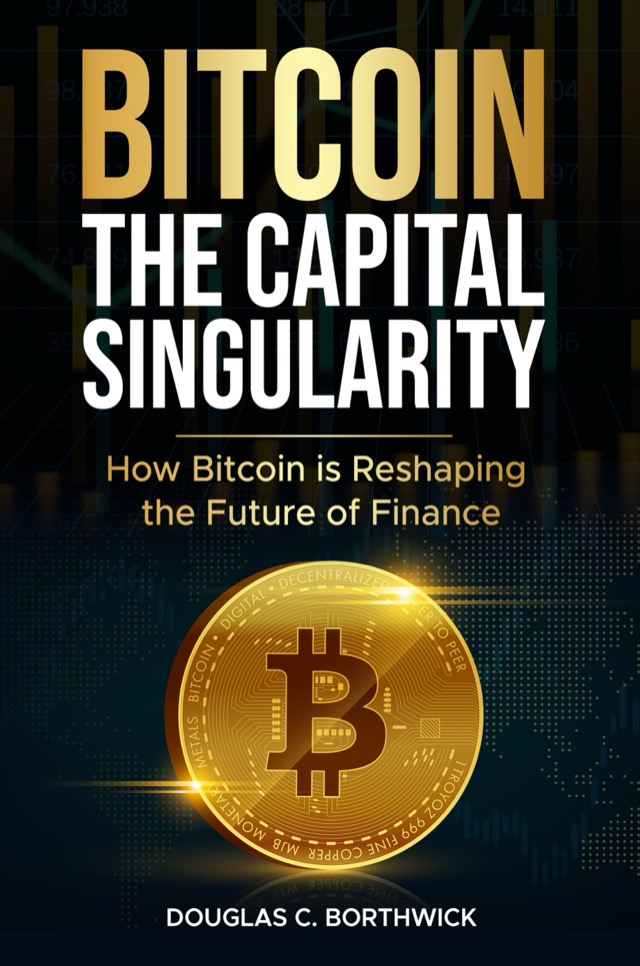
Old Men, New Money co-host Douglas Borthwick has written on this in depth.
Watch: Bitcoin, ETFs & Institutional Adoption
Expert conversations on how ETFs are reshaping the Bitcoin market.



Continue Learning
Want the Full Picture?
Join 38,000+ professionals getting weekly crypto and finance analysis from Wall Street veterans — delivered free to your inbox.
The weekly briefing is free, always.