
The SEC Just Did What Congress Wouldn't
Subscribe Free. The weekly briefing is free, always.
Five Years of Legal Cover
On Thursday, September 17, the U.S. Securities and Exchange Commission issued a five-year conditional exemption allowing tokenized versions of National Market System stocks to trade on permissioned automated market makers and liquidity pools. The order landed two days after the Senate failed to advance the CLARITY Act, the sweeping crypto market structure bill that had consumed over a year of negotiation and died on a 49-50 cloture vote, short of the 60 needed. While Washington argued over ethics clauses and stablecoin interest provisions, the SEC moved unilaterally to unlock what Congress could not: a regulatory pathway for real equity to move on-chain.
The exemption is specific. It applies only to tokens that give holders the same rights and privileges as the traditional share, dividends and voting included. This is not synthetic exposure. Not a derivative wrapper. Not a cash-settled contract. If the difference between a token that tracks a share and a token that carries a shareholder’s actual rights has never been spelled out for you, that distinction is the whole story this week, and we wrote the plain-English version of it here: what is a security token. The order covers both issuer-supported tokens and third-party tokenized stock, and issuers get an opportunity to object before their security trades on one of these venues. That speaks to the concern AMC CEO Adam Aron raised publicly the weekend of September 13, when he questioned whether Robinhood’s stock tokens remained fully backed if the underlying shares were lent to short sellers. It does not settle every question he asked about backing and securities lending. But it draws the line that matters: the token has to carry the shareholder’s rights, not just the share’s price.
Within hours of the announcement, Securitize (NYSE: SECZ), the largest tokenized securities platform in the U.S., rose as much as 22% on Thursday, carrying its market cap past $1.5 billion. StoneX later raised its price target to $12 from $10, calling Securitize the single biggest beneficiary of the order. NYSE parent ICE is evaluating Avalanche to power a 24/7 tokenized equities platform. Coinbase submitted an application to the CFTC for single-stock perpetual futures covering roughly 50 to 60 names, including Apple, Microsoft, Tesla, and Nvidia, with trading planned for later this year. Robinhood’s crypto chief Johann Kerbrat confirmed on Monday that in-kind redemption and voting rights are on the roadmap for Robinhood Stock Tokens, despite the base prospectus currently stating that holders have no such entitlements. Within 48 hours it was obvious how much infrastructure had already been built and was waiting on a U.S. regulatory path.
Why the SEC Moved Without Waiting for Legislation
Twenty years on institutional trading desks, ten of them at Morgan Stanley, teach you what a regulator looks like when it freezes. We’ve watched them choose inaction over the risk of getting it wrong every time jurisdiction was unclear. Thursday’s exemption is the opposite. The SEC used existing authority to carve out conditional relief for a new market structure, bypassing the legislative gridlock that killed the CLARITY Act. The move carries risk. If the exemption produces fraud, manipulation, or custody failures inside the five-year window, the Commission owns the fallout. Our read of the tradeoff: it is accepting the risks of a controlled experiment rather than leaving on-chain equity trading to develop entirely outside a U.S. framework. That is a defensible trade. It is still a trade.
The vote showed how hard it has become to hold a coalition together around a comprehensive market structure bill. The final draft ran 635 pages, up from 616 in July, and listed 126 changes Democrats had asked for. Five of them were in the ethics division, drawn substantially from the Tillis-Gallego proposal: officials would have to divest equity in token issuers or move it into blind trusts, state attorneys general would gain standing to sue, and the 2029 sunset came out. It still wasn’t enough. Seven Senate Democrats said publicly that the revised bill fell short, and the motion finished eleven votes shy of sixty. Our read is that a narrower bill might have survived. This one carried too much.
The SEC exemption sidesteps all of that. It applies only to tokenized versions of stocks already trading on national exchanges. It requires permissioned AMMs, not open protocols. It leaves custody, settlement, and shareholder rights inside existing securities law. The change is mostly operational: qualifying NMS stocks get a defined path onto a new on-chain venue architecture, while the securities themselves stay under the framework that already governs them. The Commission’s position is that existing Exchange Act authority was enough to grant temporary relief without waiting for new legislation. Chair Paul Atkins called it a bridge toward durable rulemaking, which is a fair description of what an order that expires in five years can and cannot do.
What This Actually Unlocks
Tokenized stocks traded over $1 billion on Solana, Robinhood Chain, BNB Chain, and Base during Labor Day weekend, when U.S. markets were closed. That volume largely sat outside the framework the SEC created on Thursday, spread across products with varying legal structures and jurisdictional restrictions. The exemption changes the equation for U.S. markets. It creates a defined path for tokenized NMS stocks that carry the same rights and privileges as their traditional equivalents, trading around the clock.
The downstream effects show up in three places. First, liquidity fragmentation gets a path toward narrowing, though nothing here guarantees it. Right now tokenized equity markets are siloed by platform and jurisdiction. A trader on Base cannot easily access liquidity on Solana. Nasdaq Ventures’ $100 million commitment to Kraken parent Payward, announced September 10, and the NYSE/ICE Avalanche evaluation both point toward infrastructure where tokenized shares move across chains. The exemption makes that buildable. It does not make it inevitable, and in the near term fragmentation may get worse before it gets better, as competing venues, chains, custody models, and liquidity pools all stand up at once. Say it plainly: tokenization solves the trading-hours problem long before it solves the liquidity problem.
Second, corporate treasuries and institutional allocators get 24/7 access to equity markets without leaving regulated custody. Japan’s Financial Services Agency made blockchain-based on-chain finance a policy priority for its 2026 program year, with plans covering payments, securities settlement, and tokenization. India’s SEBI launched a Demat 2.0 pilot issuing corporate bonds as digital tokens, settling them with the wholesale digital rupee. Three companies have already raised about $107 million through the program. The SEC exemption puts the U.S. in the same race. Deutsche Bank announced this week it is awaiting regulatory approval to launch institutional custody for Bitcoin, Ether, and select stablecoins, with plans to expand into tokenized assets. The infrastructure is converging.
Third, the cost basis for fractional ownership drops. Tokenized real-world assets hit $46.7 billion as of September 15, up 17.4 times in three years. Most of that growth is in credit funds, Treasuries, and gold. Equity has lagged because the regulated trading architecture was unresolved. This order resolves one piece of it, and only one piece: stocks already listed on national exchanges get a defined path onto permissioned on-chain venues. That is far narrower than opening blockchain capital formation to private issuers, which this exemption does not do. But for the world’s largest public equity market, a defined path is a significant change.
What to Watch Next Week
The exemption is conditional. The SEC can revoke it if compliance breaks down or if the five-year pilot reveals systemic risks the order did not anticipate. Two metrics will tell you whether this holds. First, watch for DTCC integration announcements. If tokenized shares settle through existing clearing infrastructure, the incumbents are absorbing the new architecture rather than being displaced by it, and DTCC is perfectly capable of tokenizing its own plumbing. If they settle natively on-chain with no DTCC touch, the new venues are building something parallel. Both are live possibilities, and which one wins tells you where this architecture is going to concentrate. Second, watch the custody providers. Who gets approved to hold tokenized equity under the exemption framework? If it’s the same banks and broker-dealers that dominate traditional custody, the change is incremental. If new entrants, regulated trust companies, digital asset platforms, win approval, the market structure is actually shifting.
The CFTC submitted its own crypto market framework to the White House for review on September 17, the same week the SEC issued the tokenized stock exemption. The filing is listed at the prerule stage, not as a proposed rule, meaning the comment period has not yet opened. If the CFTC follows the SEC’s playbook and issues conditional relief under existing authority, the U.S. could have functional crypto regulation by the end of 2026 without passing a single new law. Congress did not produce a market structure statute. The agencies are now testing how far the authority they already have will take them.
Presented by The Bridge. Weekly institutional research on blockchain, agentics, and tokenization, written for hedge funds, asset managers, and corporates. Because you read OMNM, the retail edition is yours for $349 (normally $399): thebridgenewsletter.com/signup?ref=omnm. OMNM co-host Douglas Borthwick co-founded The Bridge with Steve Kraus; we may earn a commission.
From the Author
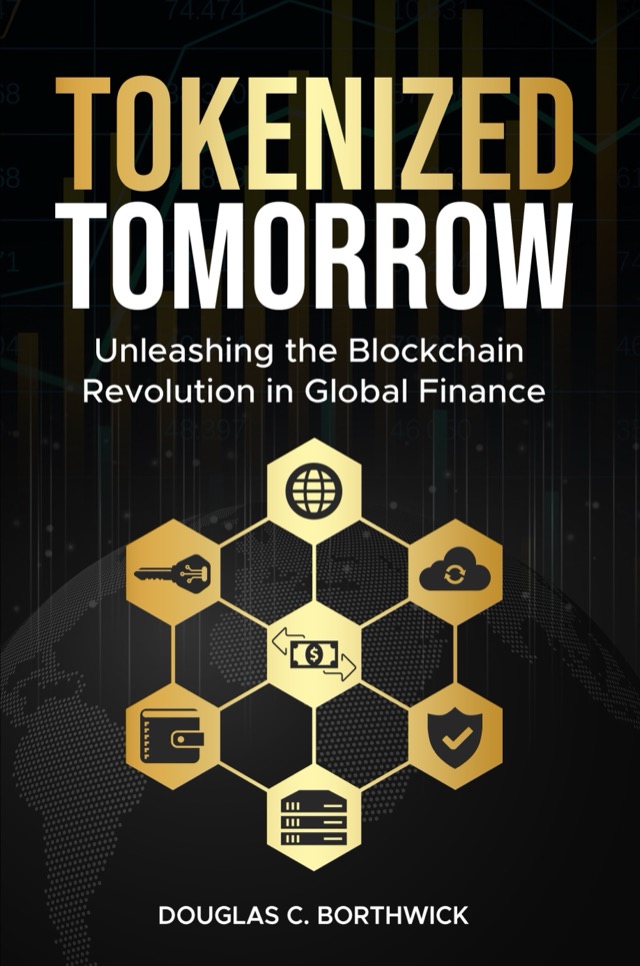
Old Men, New Money co-host Douglas Borthwick has written on this in depth.
Go Deeper — Related Education Modules
Related Guides
Never Miss an Issue
The weekly briefing is free, always.
Join 38,000+ professionals getting weekly analysis on the convergence of traditional finance and digital assets — delivered straight to your inbox.