
The SEC Is About to Make Tokenized Stocks Legal. The Hard Part Comes After.
Subscribe Free. The weekly briefing is free, always.
Last week, Bloomberg reported that SEC staff had drafted an “innovation exemption” for tokenized stocks that could be released within days — a framework letting digital versions of publicly traded U.S. securities trade on blockchain networks under formal approval for the first time. This was the headline Wall Street had been waiting for.
Then, on May 23, the SEC pulled it back. The draft was ready; the rollout was delayed amid concerns raised by exchanges, market-structure experts, and former regulators. The exemption isn’t dead. It’s being reconsidered. And the reason it stalled is the most interesting thing about this entire story.
It didn’t stall on the law. It stalled on the plumbing.
The Question That Stopped Them
For years the tokenization debate was philosophical: is a tokenized share really the stock, or just an IOU dressed up in blockchain clothing? In 2026 that argument is largely settled in principle — the legal recognition is arriving. SEC Commissioner Hester Peirce has said any framework “would only facilitate trading of digital representations of the same underlying equity security.” Same security, new container. The regulators were ready to say yes.
What they couldn’t answer was operational. When a share lives in a pseudonymous, self-custodied wallet instead of a regulated brokerage account, how does a dividend reach it? How does it cast a proxy vote? How do you verify beneficial ownership for sanctions and anti-money-laundering checks when the holder is a string of characters? Former SEC official Amanda Fischer warned that public companies could face real operational uncertainty if tokenized shares proliferate outside established shareholder-tracking systems.
That’s not a legal objection. It’s a plumbing objection. And it’s the whole point: the legal recognition is arriving faster than the operational infrastructure to support it. The exemption didn’t get blocked by people who think tokenized stocks are fake. It got paused by people who realized nobody had built the systems to make a real one behave.
I’ve spent 30 years on trading desks — through the Asian devaluation in ‘97, the Iceland collapse, LatAm FX blowups. I’ve watched what happens when a product gets approved faster than the market can absorb it. The encouraging thing here is that the SEC looked at the gap and flinched before shipping. I’ve seen this setup before, and it usually doesn’t get the pause.
What Changes Is How the Share Behaves
Start with what tokenization doesn’t change. It doesn’t make a stock a new asset class. Apple is Apple, whether the share settles at DTCC or in your wallet. Same issuer, same economics, same price.
What changes is everything about how the share behaves.
A traditional share is inert. It sits in an account at a broker who can freeze it, lend it, margin against it, and reverse a bad trade the next morning. A tokenized share is programmable and self-custodied. It can be posted as collateral by lunch and liquidated by a bot overnight — with no broker in the loop, no margin clerk, and no morning to fix it in.
This is why the draft reportedly wrestled with whether third parties could mint tokens tracking a company’s stock without that company’s involvement — and whether those tokens would carry full shareholder rights or just price exposure, behaving more like a derivative than a share. That’s not a footnote. It’s the difference between owning a company and renting its chart. And it’s unresolved because the infrastructure to deliver the “owning” part — votes, dividends, a place on the cap table — to an anonymous wallet doesn’t exist yet at scale.
The Finality Mismatch
The deepest problem isn’t custody or KYC. It’s time.
Traditional equity markets are built on reversibility. A trade settles T+1. If something breaks — a fat finger, a failed delivery, a bad print — there’s a window to correct it. Clearing houses net, transfer agents reconcile, and errors get unwound before money truly changes hands. The friction is the feature. It buys time to fix mistakes.
Blockchains are built on finality. A settled transaction is done. There is no clearing window, no overnight reconciliation, no “undo.” That’s a brilliant property for a permissionless payment network. It is a terrifying one for an equity that can also be halted, split, recalled, or litigated in the off-chain world.
So you get two clocks running at once. On-chain, the tokenized share settles in seconds and the transfer is irreversible. Off-chain, the corporate-action and dispute machinery still moves at the speed of lawyers and transfer agents. When those two clocks disagree — and they will — somebody has to reconcile a finalized blockchain transaction against a securities system that assumed it could still hit cancel. Nobody has built that reconciliation layer at scale. The exemption wouldn’t have built it either.
The 3 A.M. Liquidation
Here’s the scenario that keeps me up at night, and it has nothing to do with whether the token is “really” the stock. Assume it is — that’s the problem.
A tokenized stock gets deposited into a DeFi lending protocol as collateral. The borrower levers up. The underlying company misses earnings and the stock drops 15% — except there is no “after-hours” on-chain. The protocol’s code sees the collateral fall below threshold and auto-liquidates the position at 2 a.m. on a Sunday, dumping tokenized shares into a thin weekend market while the actual exchange is dark.
This isn’t hypothetical risk; it’s documented behavior. In March 2020, MakerDAO’s collateral liquidated so violently that keepers — the bots that execute liquidations — won auctions for roughly $8 million in ETH at effectively zero, because gas fees spiked and competing bids never landed. The system worked exactly as coded. It just wasn’t designed for the day it got tested.
Now run that with an SEC-recognized equity instead of ETH. Composability is the magic of DeFi: any token can plug into any protocol. It’s also the contagion vector. A tokenized share that an exchange has halted for a pending announcement can keep trading, keep collateralizing loans, and keep getting liquidated on-chain — because the protocol holding it has no idea the underlying market stopped. The halt that protects investors in the traditional market is invisible to the code that now controls the same security.
Self-Custody Rewrites the Rulebook
Most of securities regulation quietly assumes an intermediary. Reg T margin, Pattern Day Trader rules, trading halts, asset freezes, the ability to claw back a fraudulent transfer — all of it runs through a broker or custodian who sits between you and your shares and can be ordered to act.
Self-custody removes that intermediary. When you hold the token, there is no account for a regulator to freeze, no broker to enforce a margin call, no desk to halt your trading. Corporate actions cut the other way too: dividends, splits, and proxy votes that today flow automatically through the custody chain now have to reach a wallet whose owner may be anonymous, offline, or a smart contract that can’t vote. This is precisely the gap the SEC blinked at.
None of this means tokenized equities can’t work. It means the rulebook written for intermediated securities doesn’t automatically apply to securities that hold themselves. Someone has to rebuild margin, freezes, halts, and corporate actions in code — and an exemption that authorizes trading is not that someone.
And the Money Still Has to Move
Underneath all of this sits a settlement-currency question. On May 19, Trump signed an executive order — “Integrating Financial Technology Innovation Into Regulatory Frameworks” — directing the Federal Reserve to review, within 120 days, whether crypto and fintech firms should get direct access to the central bank’s payment infrastructure, including the Fedwire settlement network. The Fed has floated limited “skinny” master accounts as a middle path; the Kansas City Fed already granted a limited-purpose account to Kraken’s parent in March.
Translation: the administration wants crypto firms closer to the Fed. The Fed wants to control the door.
It matters because the cash leg has to settle as fast as the equity. Trade a tokenized Apple share and you’re settling in stablecoins or tokenized dollars; if that cash doesn’t have direct Fed access, it clears through correspondent banks — reintroducing exactly the cost, latency, and counterparty risk that instant on-chain settlement was supposed to remove. You can give the equity 24/7 finality and still bottleneck it on the money side.
What It Means for You
If you’re a retail investor, don’t mistake a delayed framework for a closed door — and don’t mistake legal recognition for market readiness. Tokenized stocks are coming. The infrastructure underneath them isn’t finished, which is the entire reason last week’s exemption slipped. The plumbing isn’t theoretical anymore: it’s the thing now setting the timeline.
The groundwork is real. The SEC approved Nasdaq’s tokenized-securities framework in March; Nasdaq is working with Kraken, and the parent of the NYSE has invested in OKX to chase the same prize — a $126 trillion equity market moving toward blockchain rails. But the on-chain tokenized-stock market sits around $1.4 billion today. One firm projects $400 billion by year-end. Mind that gap. It’s not a measure of demand. It’s a measure of how much plumbing still has to be built.
For now, watch who gets approved as custodians. Watch whether the next draft answers the dividend-and-voting question or punts it. And watch what happens the first time a tokenized stock is halted on its home exchange but keeps trading on-chain. Because eventually, it will.
What’s Next
The exemption will come back — the direction of travel is clear, and Washington wants this. When the next draft surfaces, the headlines will say tokenized stocks are finally legal, and they’ll be right, and they’ll be missing the point. Read the fine print on finality, custody, shareholder rights, and platform eligibility. If the SEC restricts these tokens to registered broker-dealers and approved custodians, this is a controlled experiment. If it allows open third-party issuance with light guardrails, it’s a scramble.
Either way, the first 90 days after launch will tell you everything. Watch for the first finality mismatch, the first failed reconciliation, the first tokenized position that liquidates faster than the off-chain world can respond. If those breaks happen quietly and get resolved by morning, this works. If they spill into public disputes and enforcement, the exemption gets pulled back again.
Here’s the thing the headlines keep getting backwards. Blessing tokenized equities was always the easy part — a signature can move at the speed of politics. Operationalizing a programmable, self-custodied, 24/7 security inside a market built for none of those things will take years, and the market will learn the hard way, the way it always does. Last week the SEC got a look at that gap and stepped back from the edge. Regulators are about to say these are real shares. We’re about to find out what a real share does when it never sleeps.
One more thread worth pulling. A security that holds itself can’t be governed the old way — there’s no broker to check a password, no account to freeze, no clerk to vouch for who’s on the other side. Once the intermediary disappears, markets stop relying on stored secrets and start relying on cryptographic proof — a signed statement that’s true right now and worthless a minute later. I wrote about that shift this week: why the password, built for supervised humans, breaks the moment the user is software that holds real value. It’s the same infrastructure problem this newsletter circles, viewed from the authentication side: From Passwords to Proofs.
From the Author
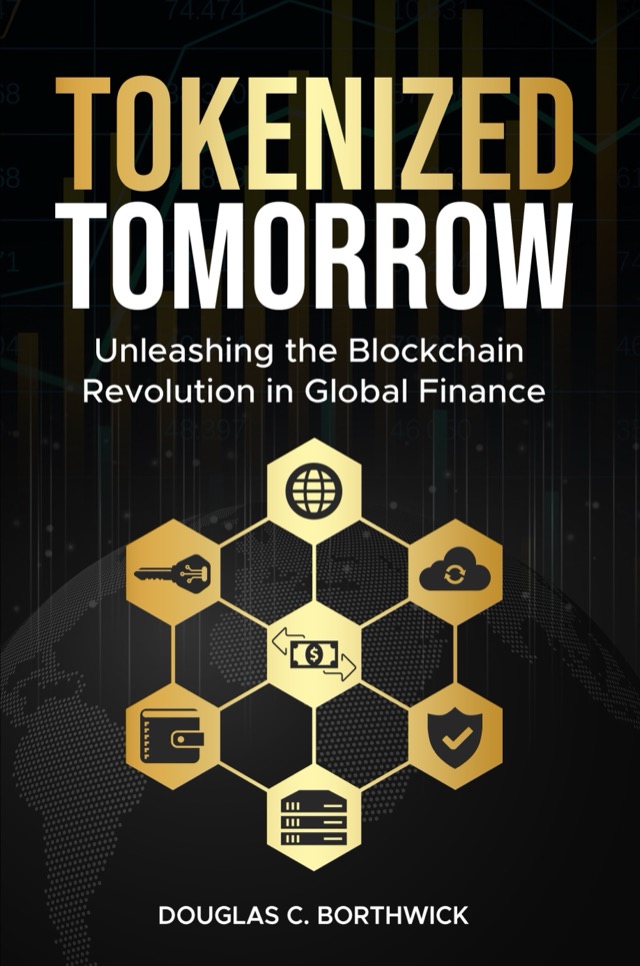
Old Men, New Money co-host Douglas Borthwick has written on this in depth.
Go Deeper — Related Education Modules
Related Guides
Never Miss an Issue
The weekly briefing is free, always.
Join 38,000+ professionals getting weekly analysis on the convergence of traditional finance and digital assets — delivered straight to your inbox.