OMNM
← Back to Blog

SWIFT Just Put 17 Banks on a Shared Blockchain Ledger. Here's Why Citi and HSBC Signed On.

The Old Men·July 12, 2026
Share:XLinkedInFacebook

Subscribe Free. The weekly briefing is free, always.

SWIFT Flipped the Switch

SWIFT announced July 9 that its blockchain-based shared ledger has entered initial operational status. Seventeen global banks are now preparing to use it to transfer tokenized deposits around the clock, including weekends. The pilot roster includes Citi, HSBC, BNP Paribas, MUFG, UBS, Standard Chartered, Wells Fargo, BNY, and DBS, spanning six continents. The infrastructure is live. The banks' first transactions are next.

The stated goal is 24/7 banking. Tokenized deposits move between institutions on the ledger in real time, seven days a week. That matters because traditional correspondent banking shuts down outside business hours. Cross-border payments that hit a Friday evening in New York sit idle until Monday morning in Tokyo. SWIFT's ledger removes that wait for the institutions using it.

But the headline overstates what actually changed. The ledger enables 24/7 transfer of tokenized claim rights. Ultimate settlement, the moment when central bank reserves actually move and legal finality occurs, still depends on the ECB's T2 and the Fed's Fedwire. Those systems operate on banker's hours. SWIFT built a layer that provides instant visibility and provisional finality, but the money doesn't truly settle until the central banks open their doors.

Why SWIFT Built This Instead of Letting Stablecoins Do It

SWIFT has spent 50 years as the dominant messaging layer for cross-border finance. It carries instructions. It does not move money. Banks send payment orders through SWIFT, and correspondent banks execute settlement through a chain of nostro/vostro accounts. The system works, but it is slow, opaque, and expensive. Stablecoin issuers built a competing model: tokenize the dollar itself, settle on public blockchains, cut out the intermediaries. Tether's USDT now dominates crypto payments while Circle's USDC leads DeFi usage, and together they represent a large and growing share of onchain dollar flow.

That volume terrifies banks. It represents payment flow they used to own. The biggest U.S. banks are already building their own stablecoin to claw it back. Circle just received final OCC approval on July 10 to establish a national trust bank. Tether dominates emerging market FX access. The competitive threat is not theoretical. It is measurable in basis points bled every quarter.

SWIFT's ledger is the institutional answer. It gives banks a way to offer near-instant, 24/7 transfers without ceding control to public chains or stablecoin issuers. The deposits stay in the banking system. The ledger is permissioned. The participants are all regulated entities. It is blockchain technology deployed to defend the correspondent banking oligopoly, not disrupt it.

I have watched this movie before. In the late 1990s, after decades of Herstatt-risk scares, the major banks agreed to rebuild the FX settlement plumbing. CLS Bank launched in 2002. It worked. It also kept the same banks in control of the plumbing. SWIFT's tokenized deposit pilot follows the same script. The technology is new. The power structure is not.

What Actually Gets Faster and What Stays Slow

The pilot improves speed in two specific ways. First, it eliminates information lag. All seventeen banks see the same ledger. When Citi marks a tokenized deposit for transfer to MUFG, MUFG sees it immediately. No SWIFT MT message delay, no query to a correspondent bank, no waiting for a reconciliation file. Visibility is instant.

Second, it enables conditional transactions. Smart contracts on the ledger can execute delivery-versus-payment automatically once both legs of a trade are present. That removes operational risk and settlement fails caused by timing mismatches. For securities settlement, FX swaps, and trade finance, that is a significant upgrade.

But the base layer, central bank money, still moves at central bank speed. The ECB's T2 settlement system went down twice in the span of eight days, on June 29 and July 6. Each outage delayed euro payments. SWIFT's ledger does not fix that. It cannot. Central banks are not on the ledger. The final step, converting tokenized deposit claims into actual central bank reserves, happens off-chain during business hours.

This is the structural compromise. SWIFT preserved the existing hierarchy: central banks clear, commercial banks settle, SWIFT routes. The ledger makes the commercial bank layer faster. It does not touch the central bank layer. That is by design. Central banks were never going to let a private consortium take over monetary settlement. SWIFT understood that and built accordingly.

What This Means for Stablecoins and the GENIUS Act

The U.S. GENIUS Act became law a year ago this month. It created a federal framework for payment stablecoins, requiring full reserve backing and regulatory oversight. Circle and Paxos are positioning to operate under it. The European Union is preparing MiCA revisions in response to the U.S. stablecoin law, with regulators expected to review stablecoin rules and other digital asset provisions starting in 2027.

SWIFT's ledger does not compete with stablecoins on the same terms. It is not a consumer product. It will not replace USDC for onchain DeFi or cross-border remittances. But it does compete for institutional flow. A corporate treasurer moving $50 million from a Citi account in New York to a BNP Paribas account in Paris will soon be able to do that on a Saturday without leaving SWIFT's rails. The bank will be able to offer a same-day alternative that stays inside the traditional system, and that narrows the opening stablecoin issuers have been aiming at.

That is the strategic threat to stablecoins. Not replacement. Marginalization. If banks can offer 24/7 tokenized deposit transfers with instant visibility and smart contract execution, the use case for institutional stablecoin adoption narrows. Stablecoins still win on composability, public chain interoperability, and censorship resistance. But for plain-vanilla corporate treasury and cross-border settlement, the gap just closed.

What to Watch

Two things will tell you whether this pilot becomes infrastructure or dies in committee. First, watch for banks outside the initial seventeen to announce participation. If SWIFT adds another twenty institutions by September, the network effect begins. If the roster stays static, it is a proof of concept that never scaled.

Second, watch whether central banks join the ledger. SWIFT has run multiple CBDC interoperability experiments with dozens of central banks. And the central banks have a SWIFT-free option of their own: the settlement network that just moved $69 billion, which we covered last month. If a major central bank, particularly the Federal Reserve or ECB, announces integration with SWIFT's ledger to enable true real-time gross settlement, the game changes. That would eliminate the legacy bottleneck entirely. Until that happens, this is a faster messaging layer on top of the same old plumbing.

T2 stumbled twice in the days just before SWIFT flipped the switch. That timing is the entire pitch: the old rails keep breaking, and the new layer promises to never close. The question is whether regulators and central banks let it grow into something that actually replaces the infrastructure that keeps failing, or whether it stays a workaround that makes the old system just good enough to survive.

Want the fundamentals behind this story? Our free educational series starts with Blockchain 101: What Wall Street Needs to Know, and 30 plain-English guides live at oldmennewmoney.com.

Presented by The Bridge. Weekly institutional research on blockchain, agentics, and tokenization, written for hedge funds, asset managers, and corporates. Because you read OMNM, the retail edition is yours for $349 (normally $399): thebridgenewsletter.com/signup?ref=omnm.
OMNM co-host Douglas Borthwick co-founded The Bridge with Steve Kraus; we may earn a commission.

From the Author

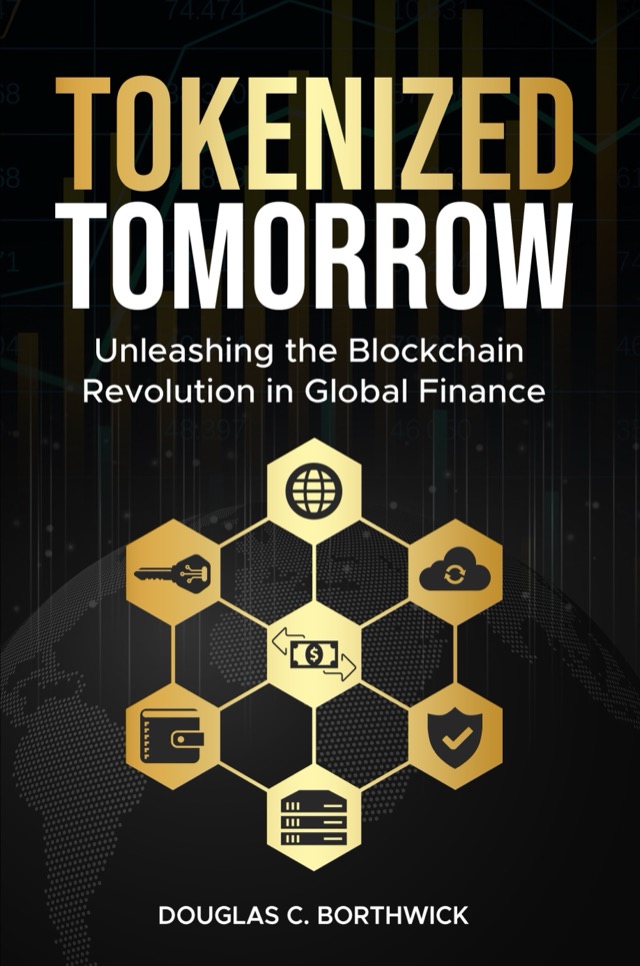
Old Men, New Money co-host Douglas Borthwick has written on this in depth.
Never Miss an Issue

The weekly briefing is free, always.

Join 38,000+ professionals getting weekly analysis on the convergence of traditional finance and digital assets — delivered straight to your inbox.